If most of the machine's time goes to loose material, grading, back-dragging, and loading, a 4-in-1 (combination) bucket earns its keep as a single attachment that digs, doses, grades, and clamps odd-shaped loads. If the work is brush, logs, exposed roots, rock, or bulky demolition debris, a dedicated grapple bucket or grapple rake holds that load far more securely than a 4-in-1's clamshell jaws, and an open-tine design lets loose soil fall through instead of riding along. Both attachments use hydraulic clamping, but they differ in mechanism, jaw geometry, sightlines, added weight, and — most importantly — what each one is bad at. This guide is evidence-based buying guidance, not a fitment confirmation; Skid Steer Zone is quote-only and does not sell or list stock, price, or availability for these attachment families.
- Task fit
- 4-in-1 for loose material and grading; grapple for brush, logs, rock, and debris
- Mechanism
- 4-in-1 clamshell vs. grapple's independent hydraulic jaw
- Boundary
- Published weight and clamp-force figures are per-model; confirm on the current spec sheet
Start with the task, not the attachment
A dealer comparison of the two attachments frames the decision around job mix rather than attachment features: pick a 4-in-1 first when loose material and grading take up most of the machine's time, and pick a root grapple first when the loader mainly handles brush, logs, exposed roots, rocks, or bulky debris (MMS Industrial). The same source notes a root grapple "fills a clear gap when an existing bucket already completes the dirt work but struggles with brush and logs" — the two attachments are rarely competing for the same job; they compete for the second attachment slot on a machine that already owns one general-purpose bucket.
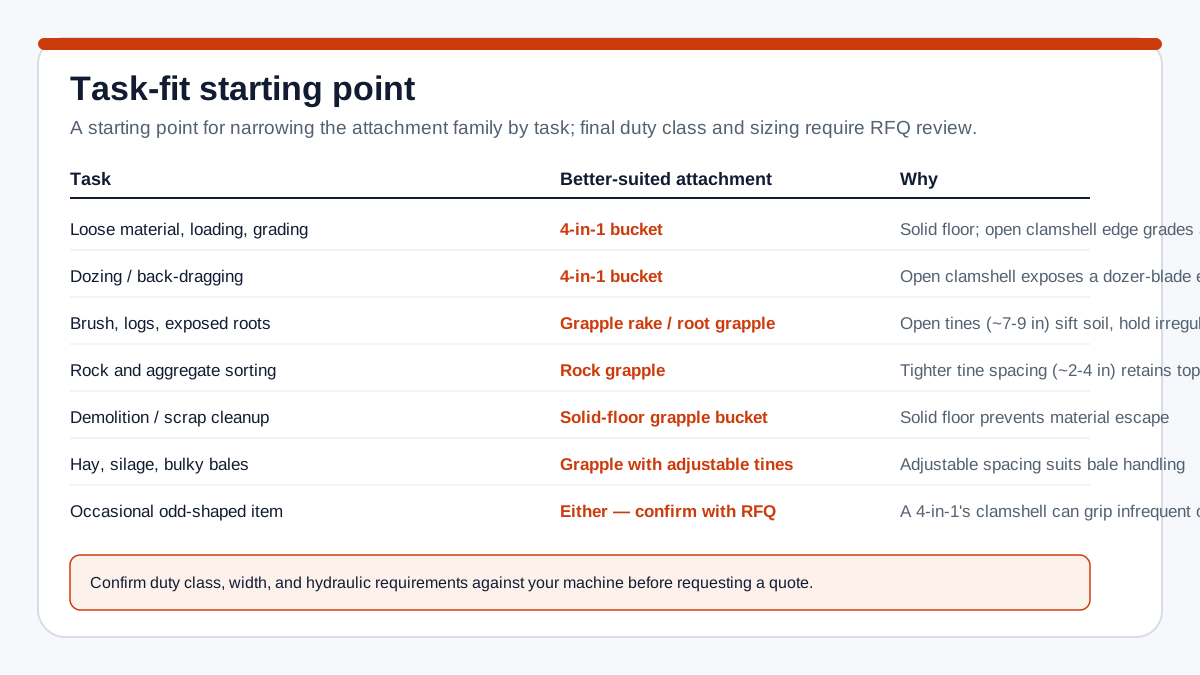
The table below sets out common job types against the better-suited attachment, based on the mechanism differences covered in the following sections. Job mix, not brand preference, should drive the choice; review your own recent work orders for which material type consumed the most machine hours before committing to either attachment.
How the two clamping mechanisms differ
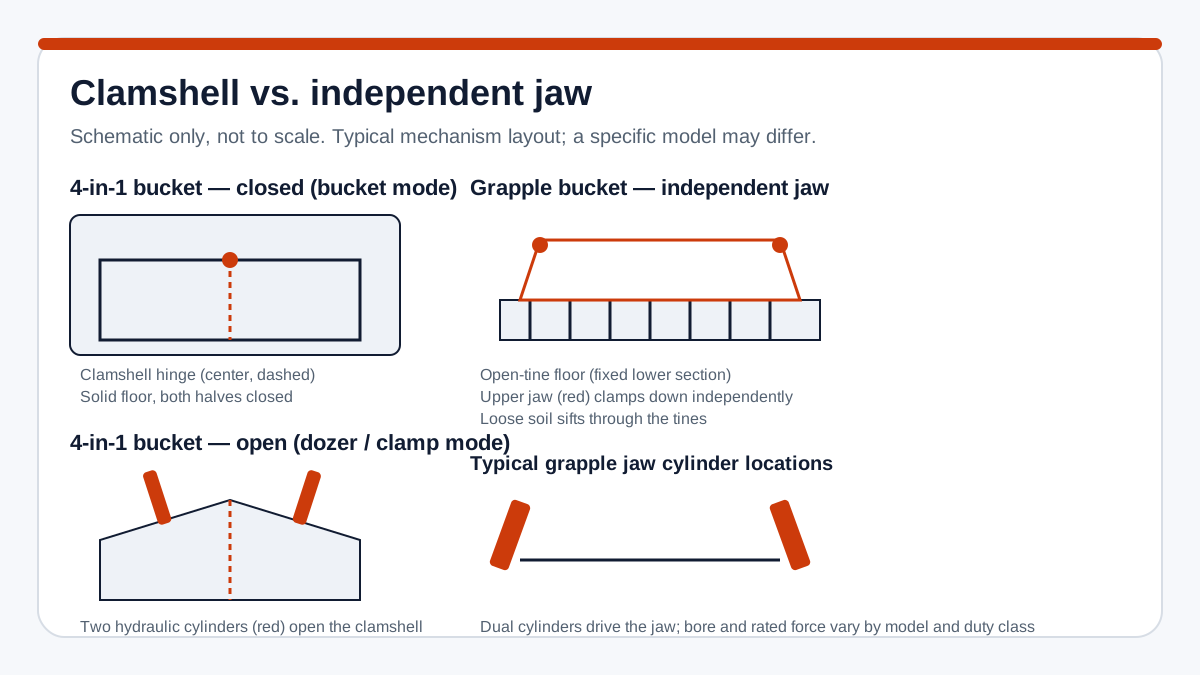
A 4-in-1 bucket is built as a solid-bottom bucket body with a hinged clamshell section. Two hydraulic cylinders open and close that clamshell: closed, it behaves like a standard digging and carrying bucket; opened, the exposed lower edge works as a dozer blade for grading, leveling, and back-dragging, and the gap between the two halves can clamp irregularly shaped material such as branches or rock (McLaren Industries; Bobcat Company). Bobcat's own combination-bucket description states the attachment "can be used as a bucket for loading, carrying and dumping; as a grapple for handling odd-shaped objects; or for dozing, leveling and spreading material with the clamshell open," and cites interlocking, serrated grapple edges on the jaw to help hold odd-shaped loads.
A combination (4-in-1) bucket attachment covers the same clamshell mechanism described above. A grapple bucket instead pairs a bucket floor (solid for demolition/scrap work, or open-tine for brush and root work) with one or more hydraulically actuated upper jaws that close down onto the load from above, independent of the bucket's digging or carrying function (CID Attachments; skidsteers.com). Because the jaw is a dedicated clamping mechanism rather than the split halves of the bucket body itself, it can apply continuous downward clamping force to a load that is already resting in or on the bucket floor — useful for material that shifts or wants to spill, such as loose brush.
The floor geometry is the other major difference. Root- and brush-grapple models commonly use spaced tines rather than a solid floor. A dealer buyer's guide describes root-grapple tine spacing around 7 to 9 inches, wide enough that loose soil sifts through while roots, logs, and brush stay caught, versus roughly 2 to 4 inches on rock-grapple models built to sort stone while retaining topsoil (skidsteers.com). A 4-in-1's clamshell floor is solid on both halves, so it is not designed to separate soil from debris the way an open-tine grapple is.
Jaw and clamp force: what manufacturers actually publish
Clamp-force figures are model-specific and manufacturer-published, not a single industry number, so treat any figure below as "per that manufacturer's spec sheet," not a universal rating.
Grapple bucket cylinders vary by duty class. CID Attachments groups its skid steer grapple bucket attachments into five duty tiers by horsepower and tine thickness: Standard Duty for machines up to 45 HP with 3/8-inch tines, Heavy Duty for 45–65 HP machines with 1/2-inch tines, X-Treme Duty for 65+ HP machines with 5/8-inch tines, and Severe Duty / Monster Class models for 75+ HP machines with 3/4-inch tines; most models use dual 2-inch-bore by 10-inch-stroke hydraulic cylinders, with heavier-duty variants stepping up to larger-bore cylinders.
A published grapple-bucket spec sheet. Berlon's Extended Lip grapple bucket, as listed with its manufacturer-supplied specifications by an authorized reseller, uses 3,000-lb-rated cylinders with 2½-inch bores and a 34¼-inch grapple opening across its 72-inch and 78-inch bucket widths, built on 3/16-inch Grade 50 steel with a 3/4-by-6-inch weld-on cutting edge (Berlon Industries, via HW Part Store).
A buyer's-guide engineering estimate. One dealer buyer's guide estimates roughly 9,420 lb of clamping force per side from a standard 2-inch-bore cylinder at typical hydraulic pressure, doubled with dual-cylinder setups — this is a physics estimate for illustration, not a manufacturer-certified rating for any specific model, and it should not be quoted as a spec (skidsteers.com).
4-in-1 clamping is a secondary function. Because a 4-in-1's clamp is the same two cylinders that open and close the digging bucket, manufacturers describe the grapple function qualitatively ("two hydraulic cylinders allow you to open the bucket," enabling the operator to "clamp down on irregularly shaped items like rocks and brush") rather than publishing a dedicated jaw-force rating the way dedicated-grapple makers do. Treat 4-in-1 clamping as adequate for occasional odd-shaped loads, not as a substitute for a dedicated grapple's sustained clamp pressure on a full load of loose brush.
Confirm any clamp-force, cylinder, or duty-class figure against the exact model's current spec sheet before buying; the manufacturer figures above are examples from specific published models, not guaranteed minimums for every unit sold under that name.
Visibility and operating feel
Sightlines differ by design intent. 4-in-1 buckets are commonly marketed around a low profile aimed at better visibility and control compared with bulkier bucket forms. Root and brush grapples, by contrast, use an open tine frame that dealer summaries describe as giving better sight lines to the tines and ground than a solid-floor attachment, because the operator can see between the tines to the load and the ground beneath it.
In practice, that means a grapple's open structure tends to make it easier to see exactly what the tines have or have not captured, while a 4-in-1's closed clamshell hides the load once the jaws are shut — a trade-off worth testing from the cab before committing to either attachment for fine placement work.
| Attachment | Representative spec | Source |
|---|---|---|
| 4-in-1 (combination) bucket, 62–90 in widths | 807–1,512 lb operating weight across the width range (mini-loader L65/L85 variants: 432–487 lb) | Bobcat Company combination-bucket specifications |
| 4-in-1 vs. standard bucket, same 72 in width | 960 lb (4-in-1) vs. 720 lb (standard dirt bucket) — roughly 240 lb added by the clamshell hydraulics and cutting edges | Virnig Manufacturing |
| Grapple bucket duty range | Standard Duty up to 45 HP with 3/8 in tines through Monster Class 75+ HP with 3/4 in tines and heavier cylinders | CID Attachments |
| Published grapple cylinder example | 3,000 lb rated, 2½ in bore, 34¼ in grapple opening (72–78 in bucket widths) | Berlon Industries, via HW Part Store listing |
Versatility vs. specialization: what each attachment gives up
The added clamshell hinge, cylinders, and second cutting edge measurably increase 4-in-1 attachment weight relative to a plain bucket — Virnig's own comparison shows about 240 lb added at a 72-inch width — and manufacturer guidance is direct about the consequence: "If you're looking to carry heavy loads, you may wish to have the lighter attachment — so long as you can sacrifice the versatility." That added weight reduces the machine's effective lift and breakout capacity for every task the 4-in-1 performs, not just the grapple function.
A dedicated grapple gives up the digging, grading, and general loose-material handling that a 4-in-1 or a standard bucket performs. Fine soil and sand fall straight through an open-tine grapple floor, which a dealer comparison calls "a significant constraint for mixed-task operations" (MMS Industrial). A grapple also cannot back-drag or fine-grade a surface the way a 4-in-1's open clamshell edge can. In practice, most machines that see regular brush, log, or demolition-debris work end up owning both attachments rather than choosing one permanently — the two cover different halves of the job mix rather than substituting for each other.
Maintenance points to expect on either attachment
Both attachments add moving, hydraulically actuated parts to a bucket, which means added wear points compared with a plain digging bucket. For 4-in-1 buckets, published guidance calls for greasing pivot pins and bushings under heavy use, regularly inspecting hydraulic hoses and fittings for leaks or abrasion, and replacing bolt-on cutting edges once significantly worn. For grapple buckets, manufacturer build notes commonly route hydraulic lines inside the frame tubing specifically to reduce line damage from debris and snagging, and call for regular greasing of the jaw pivot points and inspection of cylinder rods for scoring after abrasive jobsite work.
Neither attachment removes the need to follow the loader's own operation and maintenance manual for hydraulic pressure limits, auxiliary-flow requirements, and safe attachment-change procedure; this guide does not supply torque, pressure, or clearance values for any specific machine.
What to send before requesting a 4-in-1 or grapple quote
A complete request narrows the right duty class and width faster than a model name alone.
- Machine manufacturer, exact model, and full serial/PIN range, including rated operating capacity and horsepower.
- The job mix this attachment needs to cover — loose material and grading, or brush/log/root/rock/demolition debris — and roughly what share of machine hours goes to each.
- Auxiliary hydraulic flow and pressure available at the quick-attach coupler (standard-flow or high-flow circuit).
- Any existing bucket or attachment already on the machine, so the new attachment fills a real gap rather than duplicating a task.
- Preferred bucket or grapple width, if known, and any clearance or transport-width limits on site.
- Whether the work involves fine material (favors solid floor) or bulky/irregular material that needs soil separation (favors open tines).
Move from attachment selection to a fitment-reviewed quote
Once you've narrowed the attachment family, confirm hydraulics, controls, and capacity with the attachment fitment checklist, then send the evidence pack above through the quote path. Skid Steer Zone is quote-only: this comparison narrows candidates but does not independently confirm fitment, and nothing here is stock, price, or an operating approval.
FAQs
- Can a 4-in-1 bucket replace a grapple for brush and log work?
- For occasional odd-shaped loads, yes — the clamshell's two hydraulic cylinders can clamp down on branches or rock. For regular brush, log, or root clearing, a dedicated grapple's independent jaw and open-tine floor hold a full load more securely and let loose soil fall through, which a 4-in-1's solid clamshell floor does not do.
- Which attachment weighs more?
- Both add weight over a plain bucket. A 4-in-1 adds roughly 200–400 lb versus a standard bucket by one manufacturer comparison (960 lb vs. 720 lb at 72 inches). Grapple bucket weight varies by duty class and steel gauge and is published per model by the manufacturer; confirm the exact figure before ordering.
- Is a grapple bucket's clamping force published anywhere?
- Yes, by specific manufacturers for specific models — for example, a published 3,000-lb cylinder rating with a 2½-inch bore on one Berlon model. There is no single industry-wide clamp-force number; duty class (cylinder bore, tine thickness) determines the rating, and it should be confirmed against the current spec sheet for the model under consideration.
- Does a grapple bucket separate soil from debris?
- Open-tine grapple and root-grapple models do — tine spacing around 7 to 9 inches on root grapples lets loose soil fall through while retaining roots, logs, and brush; tighter 2- to 4-inch spacing on rock grapples sorts stone while preserving topsoil. Solid-floor grapple buckets, built for demolition and scrap handling, do not separate material this way.
- Which attachment gives better visibility from the cab?
- 4-in-1 buckets are commonly built with a lower profile aimed at improved visibility during digging and grading. Open-tine grapples let the operator see through the tines to the load and the ground beneath it, which a solid-floor 4-in-1 clamshell does not once the jaws are closed. Confirm from the actual operator's seat before committing, since geometry varies by model.
- Do I need both attachments eventually?
- Many operations that see a genuine mix of loose-material work and brush/debris work end up with both, since neither attachment performs the other's core job well — a 4-in-1 cannot separate soil from bulky debris, and a grapple cannot fine-grade or back-drag a surface.
Sources and limitations
These sources describe published manufacturer specifications for specific attachment models, along with dealer buyer's-guide summaries used for task-fit and maintenance context. Weight, cylinder, and clamp-force figures are examples tied to the cited model and width, not guaranteed minimums for every unit sold under that attachment family name. No universal fitment, hydraulic-compatibility, load-rating, or operating approval is claimed; the exact machine's operation manual and a reviewed supplier fitment check control the final decision, which remains quote-only.
- Bobcat Company — Combination Buckets for Loaders and Telehandlers Specs: width options 62–90 in plus L65/L85, operating weights 432–1,512 lb, and the clamshell's three-function description with serrated grapple edges.
- McLaren Industries — The Four Functions of a 4-in-1 Skid Steer Bucket Explained: the dozer, bucket, grapple, and versatility functions, and the two-cylinder clamping description.
- Virnig Manufacturing — 4-in-1 Bucket: the 960 lb vs. 720 lb weight comparison at 72 inches and the stated carrying-capacity trade-off.
- CID Attachments — Skid Steer Grapples: duty-tier horsepower ratings, tine thickness by tier, and typical cylinder bore/stroke configurations.
- Berlon Industries Extended Lip Grapple Bucket, manufacturer specifications as listed by HW Part Store: steel gauge, cutting edge, 3,000 lb cylinder rating, 2½ in bore, and 34¼ in grapple opening.
- skidsteers.com — What Is a Grapple Bucket? and What Is a 4-in-1 Bucket?: tine-spacing ranges by grapple type, the illustrative clamp-force estimate (explicitly not a manufacturer spec), visibility notes, and maintenance guidance for both attachment types.
- MMS Industrial — Skid Steer 4-in-1 Bucket vs. Root Grapple for Your First Job: task-fit guidance, the "fills a clear gap" framing, and the fine-material limitation of open-tine grapples.