Choose over-the-tire tracks when you already have a wheeled skid steer and need removable traction or flotation for some jobs. Compare a compact track loader with dedicated rubber tracks when tracked operation is the normal requirement rather than an occasional conversion. Neither setup is the automatic winner: the correct path depends on the machine you own, the surfaces you cross, how often you need tracks, changeover and transport constraints, and—if you choose OTT tracks—the exact tire, wheelbase, clearance, and manufacturer fitment evidence.
- Identify the system
- OTT tracks wrap around a wheeled skid steer’s tires; a compact track loader uses a purpose-built tracked undercarriage.
- Choose by work pattern
- Removable use favors OTT; frequent track-dependent work justifies comparing a dedicated CTL. There is no universal percentage threshold.
- Confirm fitment
- Machine identity, tire markings and condition, wheelbase, clearance, and any approved wheel or spacer configuration must agree.
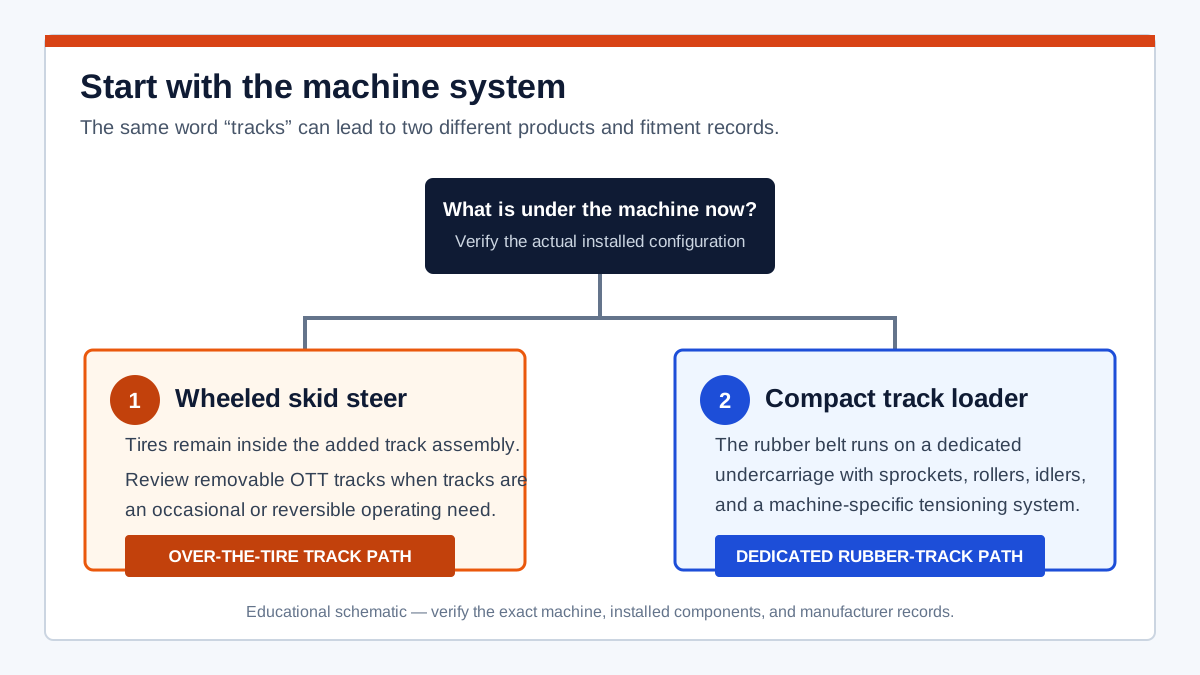
1. First identify the machine and track system
The phrase “rubber tracks” can describe two different products. An over-the-tire track is a removable assembly fitted around the tires of a wheeled skid-steer loader. Some OTT systems use a continuous rubber footprint; others use steel crossbars or linked pads. The tires, wheels, axles, and wheelbase remain part of the operating system.
A compact track loader, or CTL, is different. Its rubber belt runs on a dedicated undercarriage with sprockets, rollers, idlers, tensioning components, and a track frame. You do not remove that belt to return the machine to tires. Bobcat’s compact-loader buyer guide identifies the undercarriage—tires on a skid steer and tracks on a CTL—as the fundamental machine difference.
That distinction controls the purchase path. If you are improving an existing wheeled skid steer, start with the Over-the-Tire Tracks category. If you are identifying a replacement belt for a CTL, start with the Rubber Tracks category. Neither category result alone confirms fitment or inventory.
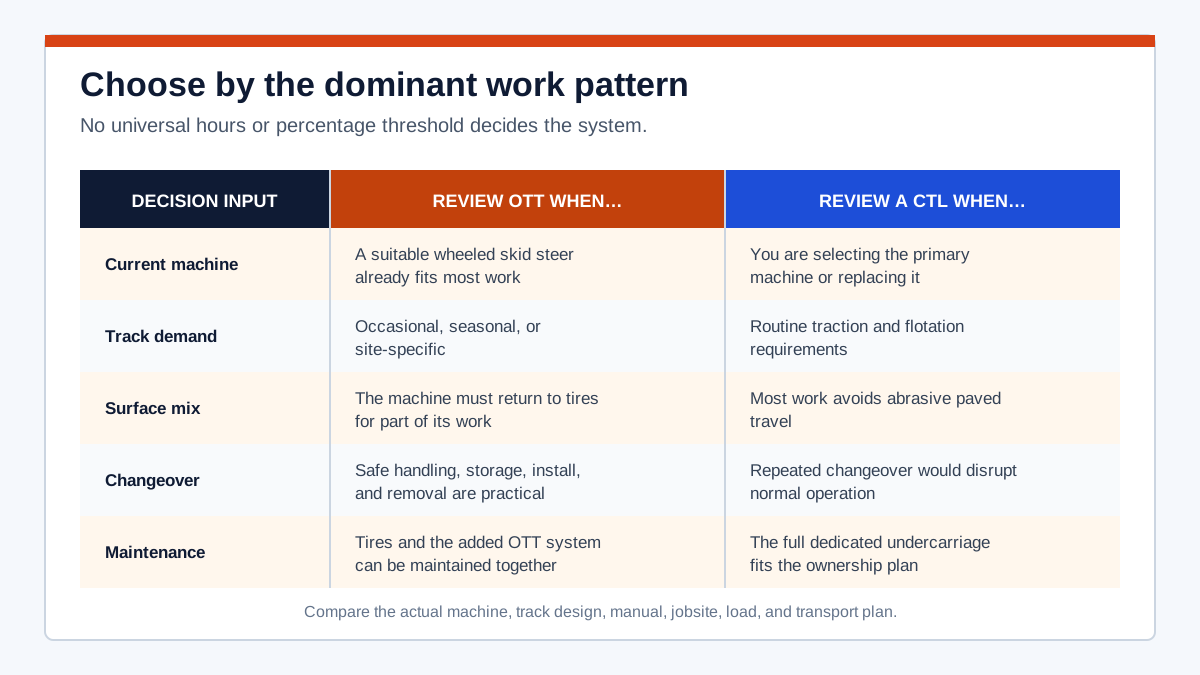
2. Choose by the work pattern, not a universal winner
OTT tracks make the strongest case when the wheeled skid steer already fits most of the operation and tracks solve a recurring but removable need. You may need tires for firm yards, paved travel, tighter transport limits, or jobs where a track system is unnecessary, then add tracks for a period of soft or loose ground.
A dedicated CTL makes the stronger comparison when soft, wet, sandy, uneven, or surface-sensitive ground is the normal operating environment and the machine is expected to work as a tracked system most of the time. It eliminates repeated OTT installation and removal, but it also commits the machine to a complete tracked undercarriage.
This is a decision framework, not a performance guarantee. Compare the actual machine specifications, track design, operating manual, dealer guidance, jobsite, load, and transport plan before deciding.
| Decision input | Review OTT when… | Review a dedicated CTL when… |
|---|---|---|
| Current machine | A suitable wheeled skid steer already fits most work | You are selecting or replacing the primary machine |
| Track demand | Tracks solve occasional, seasonal, or site-specific conditions | Traction and flotation are routine requirements |
| Surface mix | The machine must return to tires for part of its work | Most work avoids abrasive paved travel |
| Changeover | Safe storage, handling, installation, inspection, and removal are practical | Repeated changeover would interfere with normal operation |
| Maintenance | The tires and added OTT assembly can be maintained together | The complete dedicated undercarriage fits the ownership plan |
| Fitment | Tire, wheelbase, clearance, machine, and track records agree | The exact CTL belt and undercarriage records agree |
3. Compare ground conditions and surface limits
Tracks increase the contact footprint compared with the same machine operating only on tires, which can improve flotation and traction on soft or loose ground. OEM comparisons from Bobcat and Caterpillar generally place wheeled skid steers on firm or paved surfaces and CTLs on softer, wetter, sandy, or uneven conditions. The exact result still changes with the machine, tire or track pattern, width, load, turning method, moisture, slope, and soil.
Do not read “low ground pressure” as “no ground damage.” Bobcat specifically cautions that sharp turns with a CTL can still damage turf. OTT tracks also change how the machine contacts and turns on the surface. Plan gradual turns where the machine manual and site permit, and evaluate the finished surface after a controlled trial rather than promising that either track system will leave it untouched.
Hard surfaces require the opposite question: how much paved or abrasive travel will the track see? Caterpillar’s guidance notes that wheeled machines generally favor firm ground, higher travel speed, lower operating cost, and easier transport, while tracked machines favor traction and lower ground disturbance. Those are category-level tendencies, not a substitute for the actual model, track compound, and surface instructions.
Transport belongs in the same review. A track system can change the machine’s weight, overall width, loading method, tie-down plan, and trailer capacity. Use the machine and track documentation for the installed configuration; do not reuse the tire-only transport record after adding OTT tracks.
4. Compare changeover and undercarriage obligations
OTT tracks add a second operating configuration. That flexibility has value only if the crew can manage the change safely and consistently. The tracks need an approved storage and handling plan, pre-use inspection, correct installation and adjustment from the track manufacturer, and enough time to remove them when tires are the better configuration. The tires remain load-carrying and fitment-critical components underneath the track.
A dedicated CTL removes that changeover decision, but it adds a full undercarriage to the ownership plan. The rubber belt works with the sprockets, rollers, idlers, tensioning system, guards, and track frame. Wear, leakage, alignment, packed debris, and operating technique can affect the system together. If you are evaluating a used or existing CTL, inspect the complete undercarriage rather than pricing only a replacement belt.
There is no defensible universal winner for hourly cost or service life. Purchase price, tire and track design, surface, labor, downtime, replacement parts, turning habits, cleaning, and machine utilization all change the result. Build the comparison from your own machine records and supplier quotes instead of copying a seller’s percentage or payback claim.
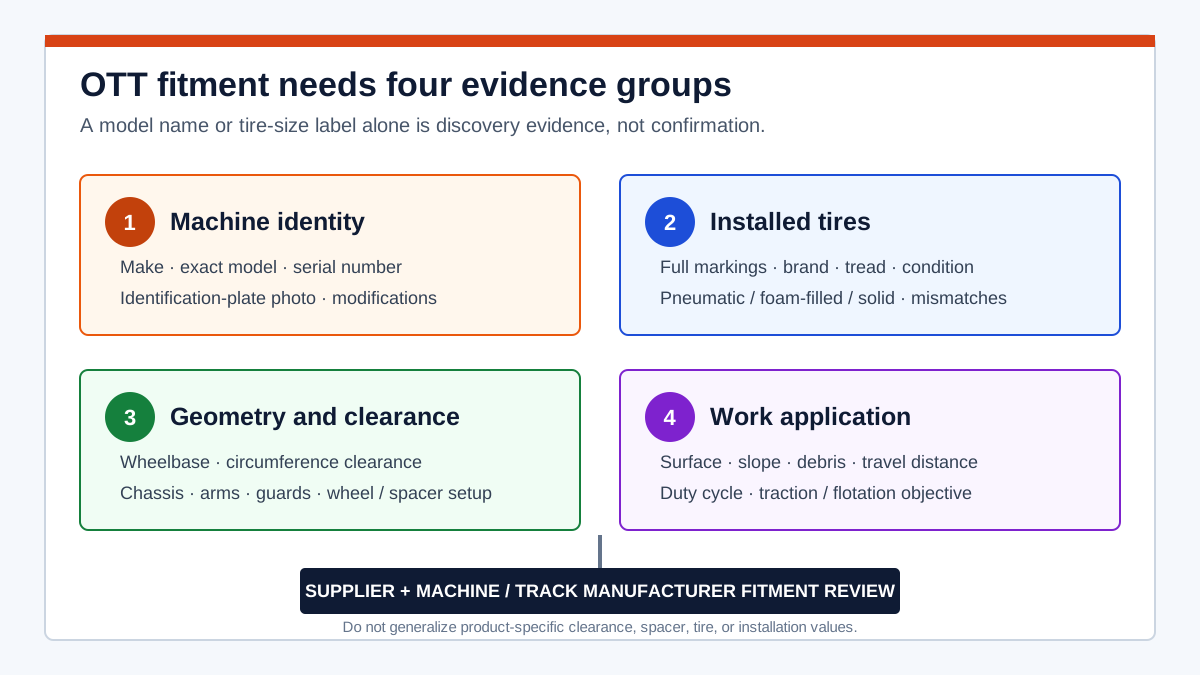
5. Confirm OTT fitment before requesting a quote
An OTT system must fit the actual installed tire-and-machine combination. A make and model or a tire-size label is useful discovery evidence, but neither proves the track has enough length, width, internal space, or machine-body clearance.
Camso’s steel OTT installation guide is one manufacturer example: it separates track kits by tire size and wheelbase, requires a pre-fit clearance check around guards, lift arms, fenders, the chassis, and other structures, and describes wheel or spacer changes only within its product instructions. Bobcat’s wheel-spacer page likewise ties spacer use to listed loader models and warns that parts can vary by serial number. These sources show why the measurement categories matter; their numeric values are not universal specifications for other products.
Do not add a spacer, reverse a rim, downsize a tire, or change a wheel configuration from a generic article. Those actions change the installed configuration and can affect clearance, overall width, guarding, and approved compatibility. Use the exact machine and track manufacturer instructions or qualified dealer support.
- Machine manufacturer, exact model, serial number, and a clear identification-plate photo.
- Every marking on all four installed tires, including the full size and construction description.
- Tire brand, tread, inflation or solid/foam-filled construction, condition, and any mismatch between positions.
- Wheelbase measured by the method required by the track supplier.
- Clearance photos and requested measurements around the tire, chassis, fenders, boom stops, lift arms, guards, and attachment interference points.
- Wheel and rim details, including any current offset, spacer, or nonstandard tire/wheel change.
- OTT manufacturer, material, model, link or section count, and full markings when a track is already installed.
- Surface, slope, debris, travel distance, duty cycle, and the reason the track system is needed.
6. Rubber or steel OTT is a second decision
After OTT is confirmed as the correct system path, choose the track material for the application. Camso’s manufacturer catalog frames rubber OTT around flotation and reduced surface disturbance, while its steel OTT is positioned for severe off-road use and penetrating traction. Other manufacturers use different constructions, pad designs, guide systems, and service rules.
Steel-versus-rubber OTT does not change the first gate: the complete system still has to fit the machine, tires, wheelbase, and available clearance.
- List every surface the track will contact, including paved crossings and finished areas.
- Rank flotation, penetrating traction, surface protection, cleanout, and resistance to the actual hazard.
- Read the manufacturer’s turning, slope, debris, and travel limits.
- Confirm the approved track works with the installed pneumatic, foam-filled, or solid tire construction.
- Identify replaceable components and required inspection or adjustment.
7. Prepare evidence for a fitment-first quote
Start by stating the system decision—OTT tracks for a wheeled skid steer or replacement rubber tracks for a CTL—then include:
- Machine make, exact model, serial number, and identification-plate photo.
- Current tire or track markings plus full installed-condition photos.
- Dominant surfaces, slope, debris, travel, duty cycle, and the problem to solve.
- For OTT: wheelbase, clearance evidence, and every wheel, spacer, or tire change.
- For a CTL replacement belt: include sprocket, roller, idler, and undercarriage-condition photos for fitment review.
- Use Find My Part when identifiers are incomplete, then prepare a quote request. Fitment and commercial details are reviewed before a recommendation; sales confirmation and payment remain offline.
FAQs
- Are over-the-tire tracks the same as compact track loader rubber tracks?
- No. OTT tracks fit around the tires of a wheeled skid steer and can be removed. A CTL rubber track runs on a dedicated undercarriage with sprockets, rollers, idlers, and a tensioning system. The products, fitment evidence, and service requirements are different.
- Can over-the-tire tracks fit any wheeled skid steer?
- No. Fitment depends on the exact machine, serial configuration, installed tire size and condition, wheelbase, clearance, wheels or spacers, and the track manufacturer’s application data. A category result or matching tire-size label is not enough to confirm compatibility.
- Can OTT tracks be used over solid or foam-filled tires?
- Only when the OTT manufacturer approves the exact tire construction and dimensions for that track and machine. Solid and foam-filled assemblies can differ from pneumatic tires in outside diameter and installed clearance, so do not infer fitment from the nominal size alone.
- Will OTT tracks damage the tires or machine?
- A correctly selected and maintained system is designed for an approved application, but damage is still possible when fitment, clearance, tire condition, installation, adjustment, debris, turning, or operating limits are wrong. Follow the machine and track manufacturer instructions and stop if the track contacts the machine, damages a tire, shifts abnormally, or cannot hold the specified adjustment.
- Should I choose rubber or steel over-the-tire tracks?
- Choose from the track manufacturer’s guidance for the actual surface and hazard. Rubber OTT often targets flotation and reduced surface disturbance; steel OTT often targets severe off-road durability and penetrating traction. Product designs vary, so neither material is the universal winner.