Before ordering a skid steer filter kit, compare the proposed contents with the documented service scope for your exact machine and engine. Build one row for each service position, keep the installed marking, applicable OEM identifier and proposed item separate, and record missing items or unresolved differences. The result should be a kit reconciliation record that a supplier can review—not a fitment conclusion drawn from a model name or kit photograph.
Kit review record
- Scope
- exact machine, engine, serial/PIN and applicable service documentation.
- Comparison
- documented positions, identifiers, quantities and unresolved exceptions.
- Reply
- an itemized supplier response tied to the same scope and proposal revision.
This guide gives you a blank worksheet, rules for handling exceptions and a hypothetical example you can repeat. It does not specify which filters your machine needs, prescribe a service interval or confirm that a kit fits.
Lock the machine and service scope first
Start with the request you actually need to fulfill. Record the machine make and full model, serial/PIN, engine identity and any relevant installed options. Keep the machine identifier and engine identifier in separate fields. If either is unreadable, say so.
Next, record the service scope from documentation applicable to that configuration. Include the document title, version or date, page or section, and the evidence that it applies to your machine. The scope might refer to a scheduled service or a specific circuit, but a kit's marketing label is not your service instruction. Do not turn an advertised hour interval into a requirement for your machine.
Keep a copy or reference for the proposed kit as well: supplier, listing or quotation identifier, contents list, quantities and revision/date. This gives you two things to reconcile: what the documented service requires and what the supplier proposes to supply. If the applicable service record is missing, the scope stays unresolved; filling the worksheet with guessed filter positions would hide that gap.
Use this header above the comparison:
| Header field | What to record |
|---|---|
| Machine | Make, full model and serial/PIN |
| Engine and configuration | Engine identifiers, relevant options and unknowns |
| Service scope | Exact requested work and applicable document/version/page |
| Proposed kit | Supplier, listing/quote reference, contents and revision/date |
| Open scope question | What is missing, who can answer and which reference is needed |
Keep serial information in the private review request. Do not put it in a public link.
Build a position-by-position kit reconciliation worksheet
Create the position list from applicable service or parts records, checked against the installed configuration. Do not use a generic list of oil, fuel, air and hydraulic filters as though every position belongs in every kit. A component can be present on the machine without being part of the service scope you are ordering.
Give each documented position a stable row ID. Record its required quantity, then capture the existing marking, the applicable OEM-record identifier and the proposed identifier without merging them. Include the brand or issuing source for each number. A supplier reference and an OEM number belong in different columns even if a listing presents them together.
The installed component is evidence to preserve, not a reason to override an applicable record. If its marking differs, record that difference for review. Likewise, a kit photo can help identify what is shown, but it is not a substitute for an itemized contents list.
Use two linked tables so the record stays readable:
| Row and documented position | Scope / quantity | Existing marking | Applicable OEM ID / reference | Proposed ID / quantity |
|---|---|---|---|---|
| [Row ID; location/circuit] | [In, out or unknown; quantity; scope reference] | [Exact marking and source, or unreadable] | [Exact identifier; document/page; applicability] | [Supplier identifier; quote revision; quantity] |
| Row ID | Interface / seal evidence | Comparison state | Discrepancy | Question and requested reply |
|---|---|---|---|---|
| [Same ID] | [Observed/documented fields; reference; unknowns] | [match / unresolved / not-in-scope] | [Missing, extra, quantity, replacement or conflict] | [Evidence needed; responder; reply reference] |
Compare the interfaces and seals that the applicable records and installed evidence make relevant. Preserve dimensions, units, readable markings and photos with their sources. Do not invent a filtration rating, thread, seal material or other specification to complete a blank field.
Quantity needs its own check. If two documented positions each require one element with the same identifier, one proposed element does not reconcile both positions. Retain the two row IDs and make the quantity shortage explicit.
Give each row a comparison state
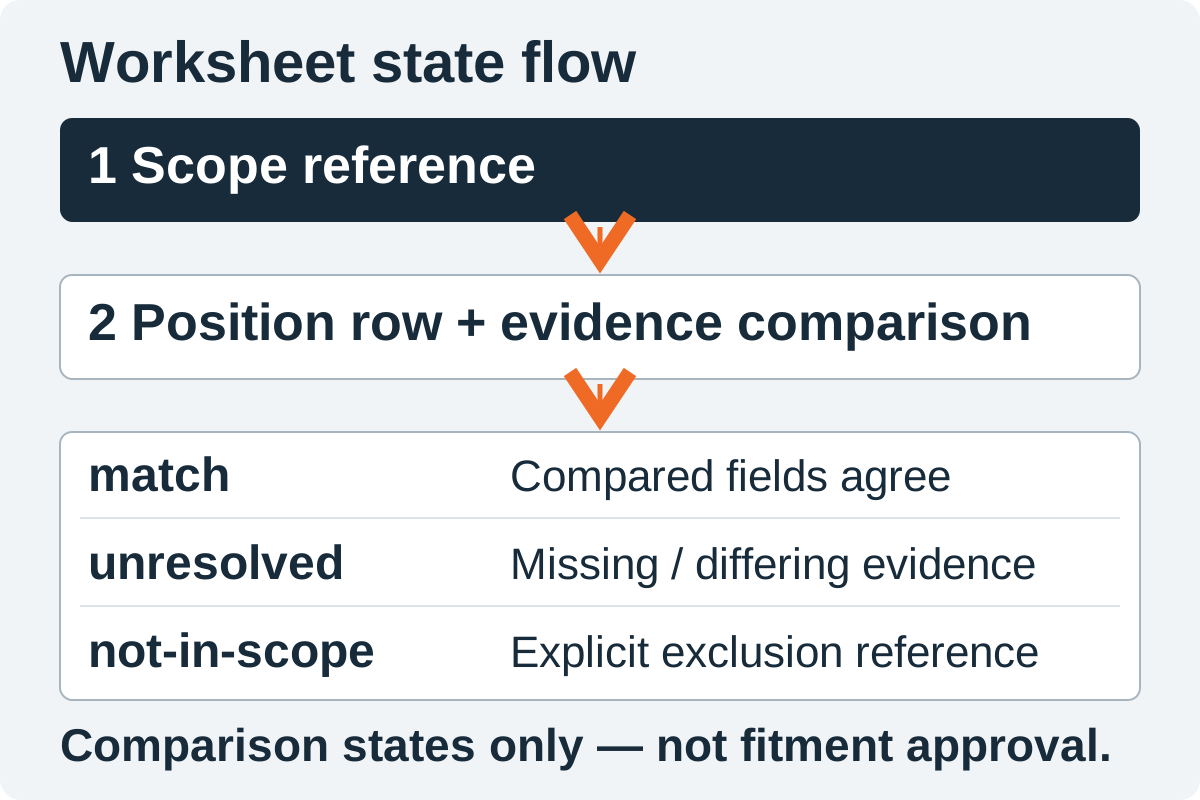
Use the following labels only for this worksheet. They are not the site's fitment statuses and do not approve a part for installation.
| Worksheet state | When to use it | What it does not mean |
|---|---|---|
| match | The applicable reference, position, quantities and compared fields agree, with no unresolved difference in those fields | Confirmed fitment, complete technical review or permission to install |
| unresolved | A needed source is absent, applicability is uncertain, an identifier is unreadable, or the evidence disagrees | The item is necessarily incompatible |
| not-in-scope | An applicable scope reference explicitly excludes the position or item from this request | The machine lacks that position or never needs it serviced |
Do not promote a row to match because two strings look similar or because its photograph resembles the old element. A blank reference is still a missing reference. When a row is unresolved, write the question that would resolve it: “Which document applies to this serial range?” is more useful than “Please check fitment.”
Separate missing, extra and excluded items
Reconcile in both directions. First, look for documented in-scope positions with no corresponding proposed item. Then look for proposed items with no documented position in the requested scope. Put these in an exception register rather than treating the total number of filters as a completeness test.
| Exception | Record | Ask the supplier to resolve |
|---|---|---|
| Missing | Documented position, required quantity and the absent proposed item | Add the item or provide the documented basis for a revised scope |
| Extra | Proposed identifier/quantity with no mapped position | Identify its documented purpose or remove it from the proposal |
| Quantity difference | Required and proposed quantities for the relevant row IDs | Correct the itemized quantity |
| Excluded from this request | Position and applicable exclusion reference | Confirm the exclusion against the same service scope |
| Unknown scope | The position or item whose applicability is not established | Supply the applicable reference; keep it unresolved meanwhile |
An extra item is not automatically wrong, and a missing item is not automatically proof of incompatibility. Both are questions requiring a disposition. A proposed item may serve a position you have not yet identified; that possibility is a reason to ask, not a reason to mark it reconciled.
Keep not-in-scope separate from missing. Exclusion requires a documented basis. If you simply do not know whether a position belongs in the service, label it unresolved.
Hold replacement claims and conflicting evidence for review
If the supplier says an identifier has been replaced by another, preserve the claimed chain: old identifier → proposed identifier. Request the supporting source, date or revision, applicable machine/engine/serial context, and any stated changes to quantity, seals or assembly scope. An unsupported “replaces” statement remains an unresolved replacement question.
This is a way to document a claim, not evidence that any particular replacement exists. Do not create your own cross-reference from similar dimensions, matching model names or an abbreviated listing title.
For conflicting evidence, retain both sources. Identify the exact disagreement, their versions/dates and what would settle it. For example, a row might contain one identifier in the installed marking and another in the apparently applicable parts record. The useful question is whether that record applies and how the installed component should be interpreted—not which identifier appears most often online.
Hold the affected ordering decision until the relevant evidence has been reviewed. Avoid treating the newest seller description as authoritative merely because it is newer.
Work through a hypothetical kit comparison
The following labels are fictional. P1, P2 and P3 are worksheet positions; A, B and X are symbols, not real OEM part numbers. This example establishes no contents list for any machine.
Assume an applicable record calls for one A at P1 and one B at P2, while explicitly excluding P3 from the requested scope. The proposal contains one A and one unreferenced X, but no B. Also assume P1's installed marking, quantity and recorded comparison fields agree with the applicable record.
| Row | Given evidence | Worksheet result | Requested disposition |
|---|---|---|---|
| P1 | Existing A, applicable record A and proposed A agree in the recorded fields | match for that comparison | Supplier reviews applicability and remaining fitment conditions |
| P2 | Applicable record and installed marking B; no proposed item | unresolved + missing | Add the item or document a proposal change |
| P3 | Applicable scope explicitly excludes this position | not-in-scope | Retain the exclusion reference |
| X | Proposed item with no position/reference in the given scope | unresolved + extra | Explain its documented purpose or remove it |
Now change one input. Suppose the supplier offers C for P2 and says it replaces B. P2 remains unresolved until the applicable replacement evidence is supplied. If another relevant record lists D instead, preserve that source too and add a conflicting-evidence question. Neither variation gives you permission to invent a B → C replacement or choose between C and D by appearance.
The example shows why “the kit contains two filters” is not a reconciliation result. You need position, quantity, applicable evidence and a disposition for each exception.
Ask for an itemized supplier reply before ordering
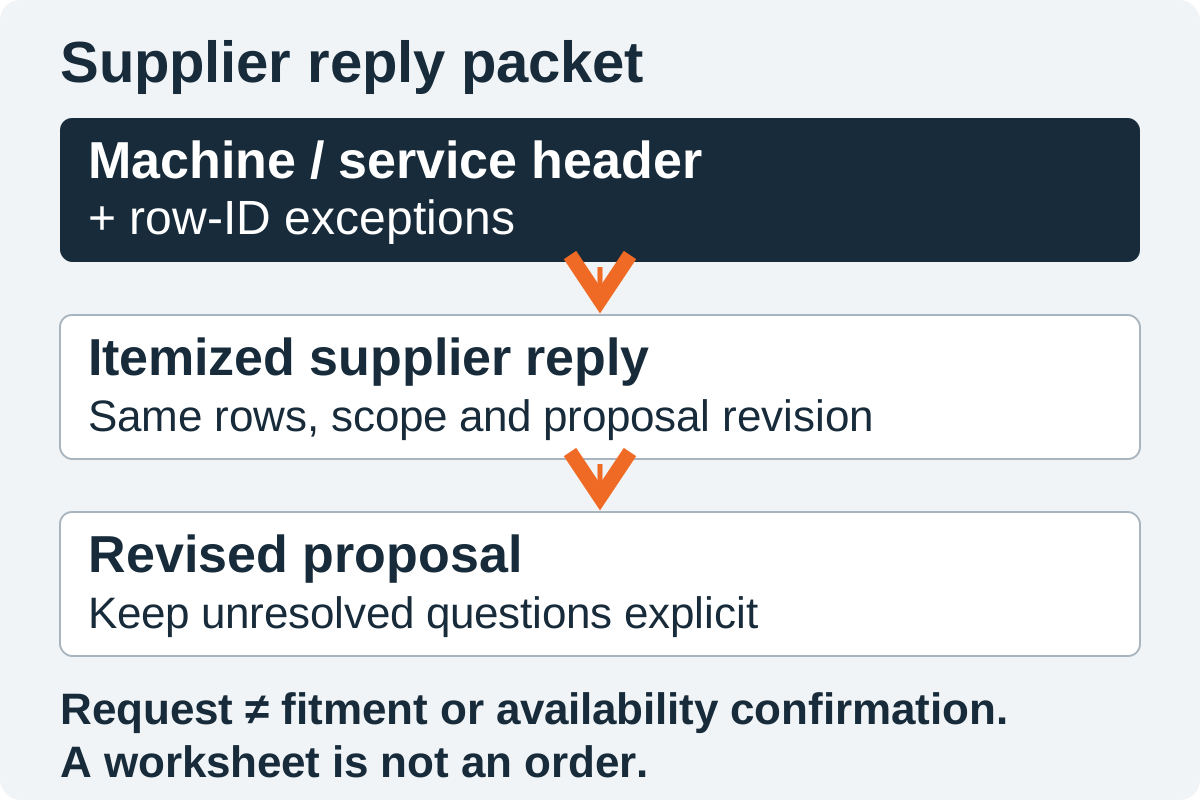
Send the scope header, comparison rows and exception register together. Ask the supplier to reply against the same row IDs and proposal revision, identifying the proposed items and quantities, applicability references, exclusion or replacement basis, and anything still unresolved.
A reply that only repeats “fits your model” does not answer a missing-position, quantity or source question. Ask for the relevant row to be addressed. If the machine, engine, service scope or proposal changes, reopen the affected comparisons rather than carrying an earlier result forward.
The maintenance and filter parts review path is the commercial starting point for this inquiry. Its source-photo records help organize candidates; they do not establish an available complete kit or compatibility for your machine.
Before ordering the affected scope, seek an explicit disposition for missing, extra and unresolved rows. Keep the commercial quotation separate: availability, pricing, freight and payment terms still require offline confirmation. A completed worksheet is a review record, not an order or technical approval.