If a flat-face hydraulic quick coupler on your skid steer's auxiliary circuit is dripping, weeping, or has become hard to connect and disconnect, work the problem in order. First separate "hard to connect" from "leaking": a coupler that will not push together, or that fights you on disconnect, is almost always trapped or residual pressure, not a broken part, and the fix is to relieve that pressure the way the machine's manual describes. Then, for a real leak, find which half has failed - the male nipple on the attachment lines, or the female body with the sleeve and the spring-loaded valve on the machine - and whether it leaks while connected and under load or while it sits disconnected. That points to a rebuild with a seal kit or a full coupler replacement. When you replace, identify the coupler by body size, thread type and size, and the interchange standard so the new one actually mates and seals. This guide gives no universal pressure-relief procedure, torque values, or approval to operate; high-pressure hydraulic fluid can injure you, so the machine's Operation and Maintenance Manual and a qualified technician control the work.
- First move
- Decide whether it is hard to connect (trapped or residual pressure - relieve it per the machine manual) or a true leak (drip under load, or a weep at rest)
- Diagnose
- Isolate the failed half - male nipple vs female body - and note connected-under-load vs disconnected-at-rest. That decides seal-kit rebuild vs full replacement
- Boundary
- The exact machine's manual and a qualified technician own pressure relief and circuit work. High-pressure fluid injection is a medical emergency. The parts decision is quote-only
1. Know the coupler and the two different problems
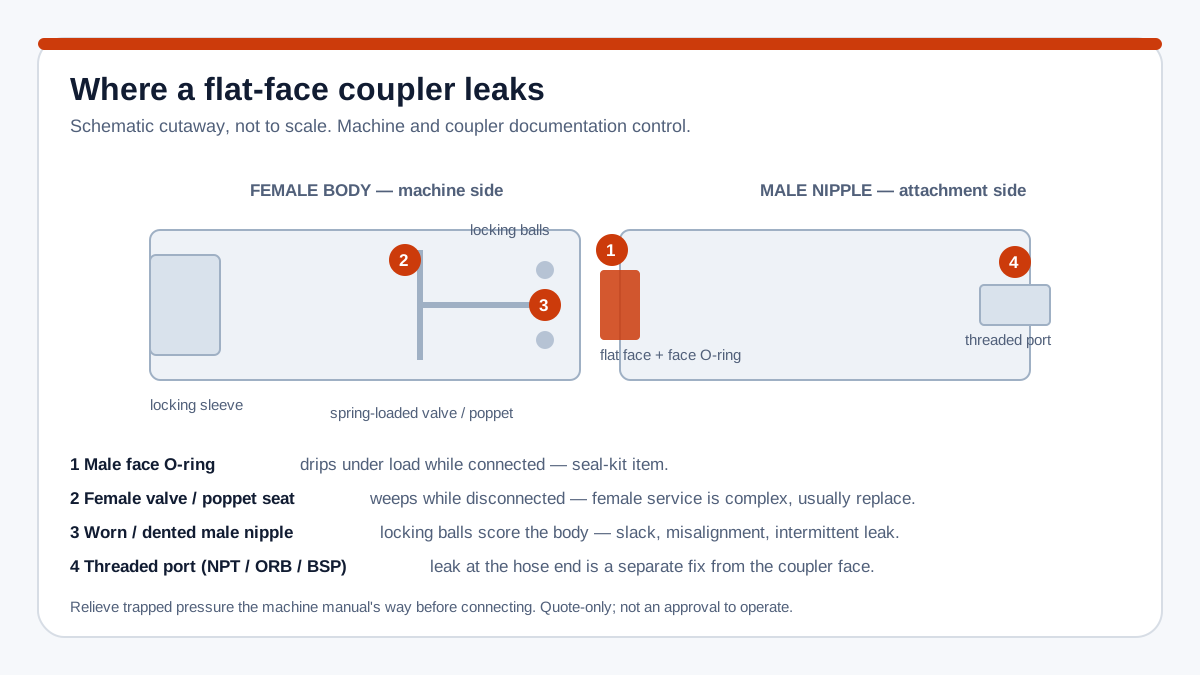
Most skid steers and compact track loaders built in the last two decades run their auxiliary attachment lines through a flat-face, also called flush-face, hydraulic quick coupler. The design has a female half - the body with the pull-back locking sleeve and a ring of locking balls, usually on the machine's loader arms - and a male half, the nipple, usually on the attachment hoses. Each half has a spring-loaded internal valve that closes when the halves separate, so the flat faces can be wiped clean and very little oil is lost.
That is the point of the standard. ISO 16028 covers the dimensions and performance of flush-face quick-action couplings and, in the ISO listing, is defined for use at pressures from 10 MPa (100 bar) to 31.5 MPa (315 bar) depending on coupling size, with automatic sealing of both the upstream and downstream sides on disconnect. The ISO listing also states that couplings to this standard are not designed to connect or disconnect under pressure.
That explains why owners describe two different complaints and often mix them up: a coupler that is hard to connect or disconnect, and a coupler that leaks. A coupler manufacturer, Stucchi, lists the same cluster of field problems - "Cold weather, debris buildup, and residual system pressure can all lead to common problems", including leaking couplers, leaks when connecting or disconnecting, and residual pressure that prevents coupling even after bleed-off. Treat the two problems separately, because the hard-to-connect one usually is not a broken part at all.
2. "Hard to connect" first: relieve the trapped pressure
A flat-face coupler that will not push together, or that you cannot pull apart, is almost always fighting trapped or residual pressure. Because the internal valves seal both sides on disconnect, oil shut inside the attachment lines has nowhere to go, and if the detached attachment then sits in the sun and warms up, that trapped oil expands and the pressure climbs further. Operator guidance is consistent: relieve the pressure before you try to connect.
The manufacturers' stated method, in general terms: park on level ground and lower the attachment or the loader arms so nothing can drop; stop the engine; then, on machines that support it, turn the key to the accessory or run position without starting, and work the auxiliary hydraulic control - the joystick detent, lever or thumb switch - back and forth several times to bleed the auxiliary circuit to tank. Some machines relieve only one side of the circuit this way by design; some older machines have no easy relief at all. A few designs answer this with connect-under-pressure couplers that can be joined by hand with residual pressure present. Get the exact sequence, and the key position your machine uses, from that model's Operation and Maintenance Manual.
High-pressure hydraulic fluid can pierce skin and cause a severe injury that needs immediate medical attention, and a pinhole leak you cannot see is enough to do it. Never search for a leak with your hand; use cardboard or paper, and wear eye protection and heavy oil-resistant gloves. Never crack a fitting or push on a coupler valve to bleed pressure unless the machine's manual describes that step for your machine. If the manual calls for a technician, use one.
3. If it truly leaks: find the failed half
Once pressure is relieved and the coupler still leaks, isolate which half, and in which state.
Connected, under load. A drip that appears at the joint only when the attachment is running points to the face-to-face seal - most often the male nipple's flat-face O-ring, the seal a repair kit replaces, or a nick, score, or embedded grit on either sealing face. A worn male nipple is common: forum diagnosis on a leaking skid steer coupler put it "90-10 that it's the male," because the male carries an exposed seal and its body can be dented over time by the female's locking balls, creating slack and misalignment. Not everyone agrees the male leads - others report female halves leaking more often - so confirm rather than assume.
Disconnected, at rest. A half that weeps oil while it sits uncoupled, with or without a dust cap, has an internal valve that is not seating. The usual cause is debris on the flat face or in the poppet, held there because the face was not wiped before the last connection; the fix may be as simple as cleaning. If it still weeps after cleaning, the poppet or its seat is damaged.
Isolate it. With the system at rest, wipe both faces, cap each half separately, and watch which cap collects oil. Connect the suspect half to a known-good mating coupler and see whether the leak follows the suspect half or stays with the machine. Keep this discovery evidence - which half, connected or disconnected, under load or at rest - because it is what a parts reviewer needs and it decides the next step.
| What you observe | Most likely cause | What to check or do next |
|---|---|---|
| Coupler will not push together or pull apart | Trapped or residual pressure, often worse after the attachment warmed in the sun | Relieve auxiliary pressure per the machine manual; let a hot detached attachment cool; consider a connect-under-pressure coupler |
| Drip at the joint only while the attachment runs | Male nipple face O-ring, or a nicked or dirty sealing face | Wipe both faces; plan a male-half seal kit; inspect both faces for score marks and grit |
| A half weeps oil while disconnected, cap on or off | Internal valve or poppet not seating, usually debris on the face | Clean the face and poppet; if it still weeps, the poppet or seat is damaged - replace that half |
| Leak at the hose end, not the coupler face | Threaded port connection (NPT, ORB or BSP) loose or its seal failed | Re-check the port fitting and its seal; this is a separate fix from the coupler |
| Play or a click in a latched coupler, intermittent leak | Worn locking sleeve, worn balls, or a dented male nipple | Replace the worn half; a coupler that will not stay latched is a safety stop, not a fitment question |
4. Rebuild with a seal kit, or replace the coupler
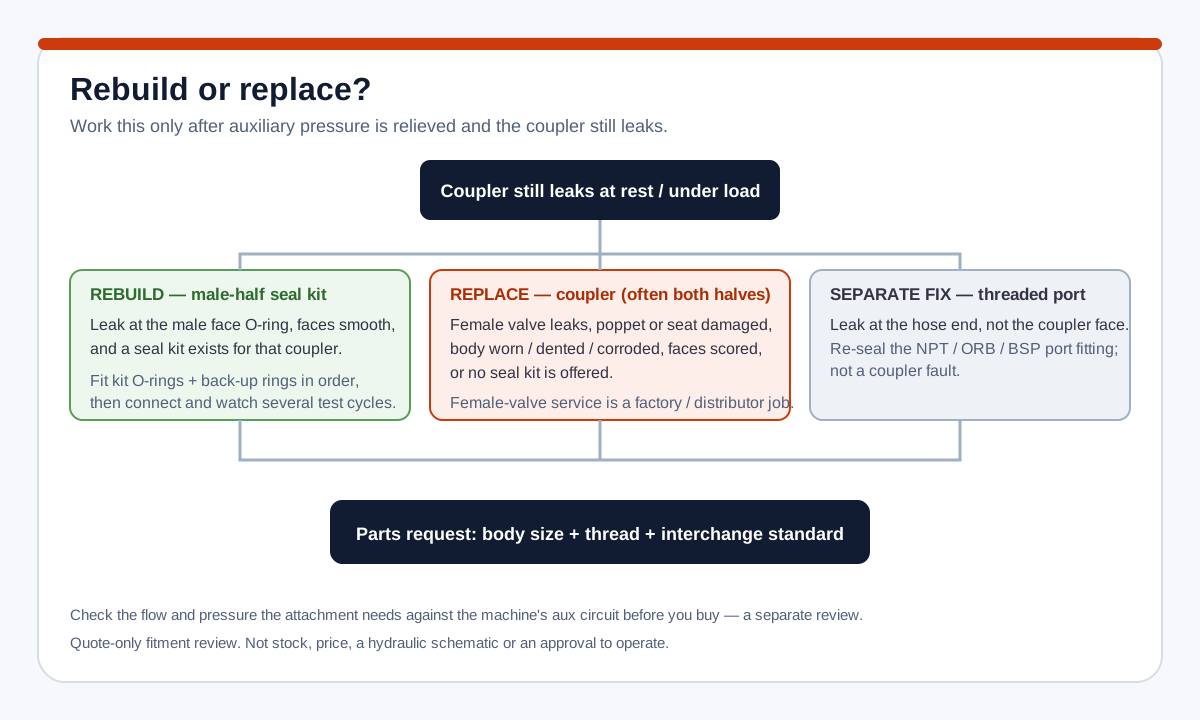
When a seal-kit rebuild is reasonable. If the leak is at the male nipple's face seal and the sealing faces are otherwise smooth and undamaged, a seal kit for that coupler is the low-cost path. Stucchi's guidance is specific: "Stucchi recommends replacing the seals on the male coupler only, as repairing the female valve is more complex." A male-half rebuild is a small job - a clip to hold the valve open, a non-marring O-ring pick, the kit's O-rings and back-up rings in the right order, and PPE - and you verify it by connecting, running the hydraulics, and watching a few cycles for leaks. Kits are made by the coupler manufacturers and by interchange suppliers.
When replacement is the right call. Replace the coupler, and usually both halves as a matched pair, when the female valve is the leak, when a poppet or its seat is damaged, when the body is worn, dented, or corroded, when the flat faces are scored, or when no seal kit is offered for that coupler. Stucchi treats female-valve service as a factory or distributor job rather than a field repair. Replacement is also sensible when the coupler is old, mismatched, or a repeat problem. Before you buy, check the flow and pressure the attachment needs against the machine's auxiliary circuit; that is a separate review, and the attachment fitment checklist covers standard-flow versus high-flow, pressure, case drain, and coupler size together.
5. Identify the right replacement coupler
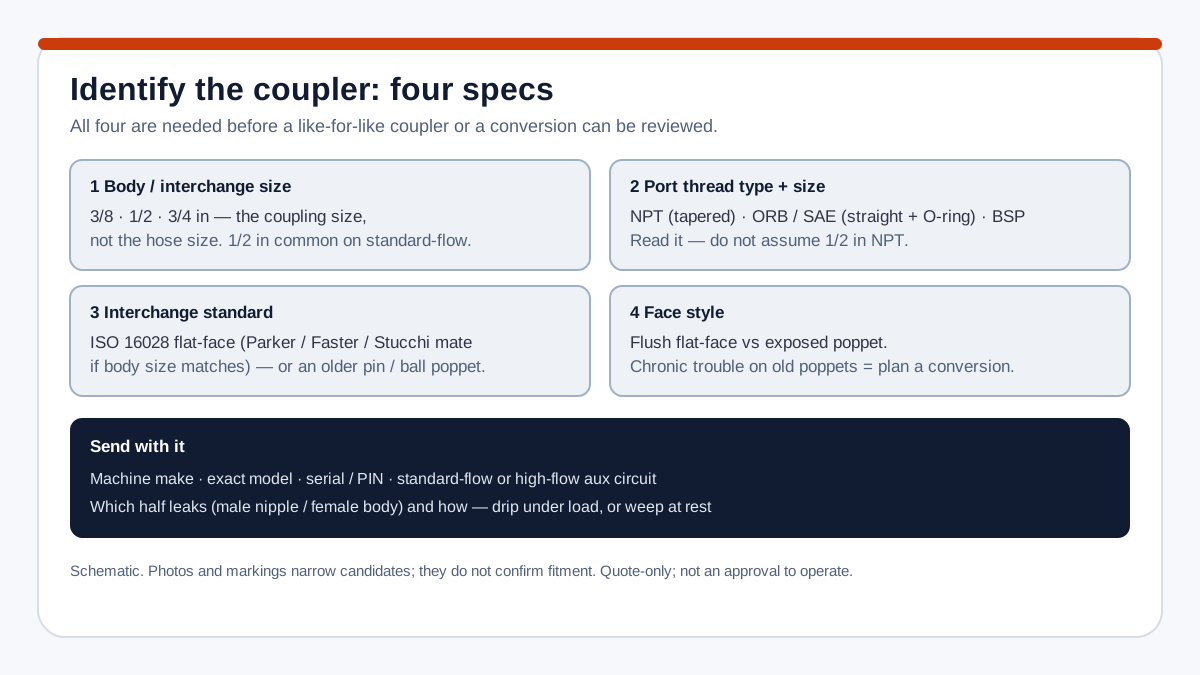
A flat-face coupler is defined by four things, and a parts request needs all four.
Body or interchange size. This is the coupling size, not the hose size - commonly 3/8, 1/2, or 3/4 inch on skid steers, with 1/2 inch the most common on standard-flow machines and 3/4 inch on many high-flow machines. Halves must be the same body size and interchange profile to mate.
Thread type and size at the port. The back of each half threads to the hose or tube. Common options are NPT (tapered pipe thread), SAE O-ring boss / ORB (straight thread with an O-ring), and BSP. A retailer's skid steer set, for example, is offered in 1/2 inch NPT and describes that as the most common thread for skid steer attachments - but read the thread, do not assume it.
Interchange standard. Modern skid steer couplers are flat-face and most follow the ISO 16028 interchange, which lets couplers from different makers mate if the body size matches. Parker's flat-face series, for instance, meets the ISO 16028 / HTMA interface in the 3/8 inch size and is rated up to 5000 psi with a sleeve lock to resist accidental disconnection. Older machines may use a pin-style or ball-style poppet coupler that will not mate with a flat-face half at all - identify which family you have before ordering.
Flush-face vs older poppet. If the machine currently has an older exposed-poppet coupler and you have chronic leak and connection trouble, converting the whole auxiliary connection to a matched flat-face set is a common upgrade, not just a like-for-like swap. Decide that deliberately and say so on the request. This article owns the leaking or hard-to-connect coupler decision; the mechanical mounting interface - whether your machine and attachment share a compatible quick-attach plate - is a different, related question. Photos, part numbers and measurements narrow candidates; they do not confirm fitment on their own.
Send a coupler evidence record for a quote
A complete request lets a parts reviewer match the coupler and decide rebuild vs replace, and it reduces wrong-part risk.
- Machine manufacturer, exact model, and full serial or PIN range, and whether the auxiliary circuit is standard-flow or high-flow.
- Which half leaks (male nipple or female body), and the behavior: drip under load while connected, or weep while disconnected, and whether cleaning the faces changed it.
- Body or interchange size of the coupler (3/8, 1/2, 3/4 inch - the coupling size), measured or from a marking.
- Thread type and size at the port end (NPT, ORB, BSP) and the hose or tube size behind it.
- Any markings on the coupler or the attachment - manufacturer name, series, part number, ISO 16028 or a brand interchange.
- Close, square-on photos of the coupler face, the hex or wrench flats, the thread, and the locking sleeve, plus the mating half.
- Whether you want a like-for-like coupler, a male-half seal kit, or a full flush-face conversion of the auxiliary connection.
Move from diagnosis to a fitment-reviewed quote
Once you know which half failed and whether you are rebuilding or replacing, use the hoses, fittings and quick couplers section for the coupler and seal parts, and the attachment service parts section for flat-face couplers, coupler seal kits and dust caps kept with the work-tool wear items. Identify the coupler by machine make, exact model and serial the same way you would identify any part - the method is in how to find the right skid steer part - then send the evidence record through the quote path. Skid Steer Zone is a quote-only catalog: photos, markings and measurements narrow candidates but do not independently confirm fitment, and nothing here is stock, price, a hydraulic schematic, or an approval to operate.
FAQs
- My skid steer's hydraulic coupler is hard to connect - is it broken?
- Usually not. A flat-face coupler that will not push together is almost always fighting trapped or residual pressure in the attachment lines, made worse if the detached attachment sat in the sun and the oil expanded. Relieve the auxiliary pressure using your machine's manual - typically engine off, key to accessory or run, and work the auxiliary control back and forth - then try again. If it still will not seat after pressure is relieved and the faces are clean, then look at the coupler.
- How do I tell whether the male or the female coupler half is leaking?
- Note the behavior. A drip at the joint only while the attachment runs points to the face-to-face seal, most often the male nipple's face O-ring. A half that weeps while it sits disconnected has an internal valve not seating. To isolate it, relieve pressure, wipe both faces, cap each half separately and see which cap collects oil, then connect the suspect half to a known-good coupler and see whether the leak follows it.
- Can I just replace the O-rings instead of buying a new coupler?
- Sometimes. If the leak is at the male half's face seal and the sealing faces are smooth, a seal kit for that coupler is the low-cost fix, and coupler manufacturers sell kits. Stucchi recommends servicing the seals on the male coupler only, because repairing the female valve is more complex. If the female valve leaks, a poppet or seat is damaged, the body is worn or corroded, or no kit exists for your coupler, replace the coupler.
- What size is my skid steer hydraulic coupler?
- The size that matters is the body or interchange size of the coupling - commonly 3/8, 1/2, or 3/4 inch - not the hose size. Standard-flow machines are often 1/2 inch; many high-flow machines use 3/4 inch. Both halves must be the same body size and interchange profile to mate. Measure the coupler or read a marking, and record the port thread separately.
- Are all skid steer flat-face couplers interchangeable?
- Modern flat-face couplers mostly follow the ISO 16028 interchange, so couplers from different makers can mate if the body size matches. Older machines may have a pin-style or ball-style poppet coupler that will not connect to a flat-face half at all. Identify which family and body size you have before ordering, and match the port thread too.
- Why does my flat-face coupler leak a little every time I disconnect?
- A small film of oil on the flat faces at disconnect is normal - flush-face couplers minimize but do not fully eliminate it. A steady drip or a weep that keeps going is not normal and points to a valve not seating, usually from debris on the face; wipe the faces before every connection. If a wiped, clean half still weeps, the poppet or seat is damaged and that half needs replacing.
Sources and limitations
The sources describe the flat-face / flush-face quick coupler design and the ISO 16028 interchange standard, its stated pressure range, and its statement that these couplings are not made to connect or disconnect under pressure; the field problems of leaking, hard connection and residual pressure, and pre-season inspection for wear, corrosion and seal fatigue; the male-half seal-kit rebuild and the recommendation to leave female-valve service to the manufacturer; the operator experience that trapped pressure and thermal expansion make couplers hard to connect and that owners relieve auxiliary pressure with the engine off and the controls worked, and that a worn male nipple is a common leak point; and typical body sizes, thread options, pressure ratings and interchange series for skid steer flat-face couplers. No machine-specific pressure-relief sequence, torque value, or operating approval is given. High-pressure hydraulic fluid injection is a medical emergency; the exact machine's Operation and Maintenance Manual and a qualified technician control pressure relief and any circuit work, and the parts decision remains quote-only.
- ISO - ISO 16028:2023, Hydraulic fluid power - Dimensions and requirements of quick-action couplings, flush-face type (standard listing): specifies interface dimensions for interchangeability and performance requirements for flush-face hydraulic quick-action couplings for use at 10 MPa (100 bar) to 31.5 MPa (315 bar) depending on coupling size; couplings to this document are not designed to connect or disconnect under pressure and seal both upstream and downstream sides automatically on disconnect. Standard listing text, not the full document.
- Stucchi USA - Maximize Hydraulic Power This Spring with Skid Steer Flat Face Couplers (Scott Rolston, published 30 April 2025): "Cold weather, debris buildup, and residual system pressure can all lead to common problems," including leaking couplers, leaks when connecting or disconnecting, and residual pressure preventing connection even after bleed-off; cracked or flattened O-rings and worn threads or damaged connection faces; "Before the season ramps up, inspect your quick couplers for signs of wear, corrosion, or seal fatigue"; Connection Under Pressure (CUP) technology connects with residual pressure present. Manufacturer guidance.
- Stucchi USA knowledge base - Can I replace the O-ring seals on a flat face coupler that is leaking, instead of buying a new coupler? and How to Replace the Seals on a Flat Face Coupler: "Stucchi recommends replacing the seals on the male coupler only, as repairing the female valve is more complex"; the male-half kit uses O-rings and back-up rings with a clip to hold the valve open, a non-marring pick and PPE; verify by connecting, activating hydraulics and running test cycles; contact a Stucchi representative for female-valve service. Manufacturer knowledge base.
- Stucchi USA - ISO 16028 Flat Face Hydraulic Couplers and glossary "ISO 16028" (Scott Rolston, published 15 October 2018, updated 2021): ISO 16028 details performance requirements for flush-face hydraulic quick couplers used within 20 MPa to 31.5 MPa; "ISO 16028 does not include couplings which connect or disconnect under high pressure"; flush face avoids fluid loss and limits contamination and faces can be cleaned before connection; thread port options include SAE, JIC, NPT, ORFS, DIN, BSP. Manufacturer content.
- Parker Hannifin - Non-Spill Flat Face HTMA / ISO 16028 Quick Couplings, FF and FC series: double shut-off non-spill flat-face design to minimize spillage and air inclusion on connect and disconnect; FF series rated up to 5000 psi and meets HTMA (ISO 16028) in the 3/8 inch size; sleeve locking mechanism to help prevent accidental disconnection. Manufacturer product data.
- Summit Hydraulics - Flat Face Hydraulic Quick Connect Coupler Set, 1/2 inch NPT, ISO 16028 and the ISO 16028 flat-face category: a 1/2 inch body ISO 16028 set rated 5,076 PSI, 23.78 GPM max / 12 GPM nominal, 1/2 inch NPT described as "the most common thread size for skid steer attachments"; body sizes 1/4 to 1 inch; thread options include NPT, ORFS, SAE O-ring / ORB, BSP, JIC; interchangeable with Parker FE, Faster FFH, Eaton Aeroquip FD89, Snap-Tite 74, Stucchi FIRG and others. Retailer product data; figures are typical, not tolerances.
- Skid Steer Forum - Hydraulic Flat face couplers (2009) and Hydraulic couplings tough to connect (2023) and hydraulic pressure relief (2010): a leaking male-female interface after several years; one member's field estimate "90-10 that it's the male," the male carrying an exposed seal and its body prone to denting from the female's locking balls; another member reports female halves leaking more often; bleed stored pressure before disconnecting; press the halves partway then pause to let a relief act; some machines relieve auxiliary pressure by holding the key in accessory as the engine stops, and relieve only one coupler this way; disconnect while the oil is hot. Operator forum, anecdotal; used for buyer language, urgency and the direction of the relief method, cross-checked against the manufacturer and standard sources.
This guide combines a coupler manufacturer's published guidance and knowledge base, the ISO 16028 standard listing, manufacturer and retailer product data, and skid steer operator experience with an editorial method for separating a hard-to-connect coupler from a leaking one, isolating the failed half, and deciding rebuild versus replacement. No machine was inspected for it. Use the exact machine's Operation and Maintenance Manual and a qualified service professional for pressure relief, circuit work, torque, and operating acceptance.