If your skid steer cranks and runs one day and will not turn over the next, with the dash lights and gauges still working, the cause is very often the operator-presence safety interlock, not the battery. The seat switch, the seat-bar (lap-bar) switch, the seat-belt switch, the parking-brake switch and the drive controls in neutral all have to be satisfied before the machine control module will let the starter engage. If any one switch, connector or the safety-interlock fuse fails, the machine will not crank. The fix is to rule out the simple setup causes, then isolate the failed part from a safe position with the machine shut down, using the machine's service-manual diagnostic procedure, and order that part by machine make, model and serial. Do not bypass the interlock: it protects you in a rollover or an entanglement, and a jumper wire leaves the real fault unrepaired. This guide supplies no wiring diagram, connector pinout or bypass procedure for any machine.
- First move
- Treat a no-crank with live dash lights as an interlock condition: sit square, seat bar down, park brake set, controls in neutral, check the safety-interlock fuse
- Diagnose
- Machine off, from a safe position, visually inspect the seat switch, seat-bar sensor, seat-belt switch and connectors; then follow the service-manual procedure. No pinouts, no jumper tests
- Boundary
- The exact machine's service manual and a qualified technician own the circuit test and any adjustment. Bypassing the interlock is unsafe and is not a repair
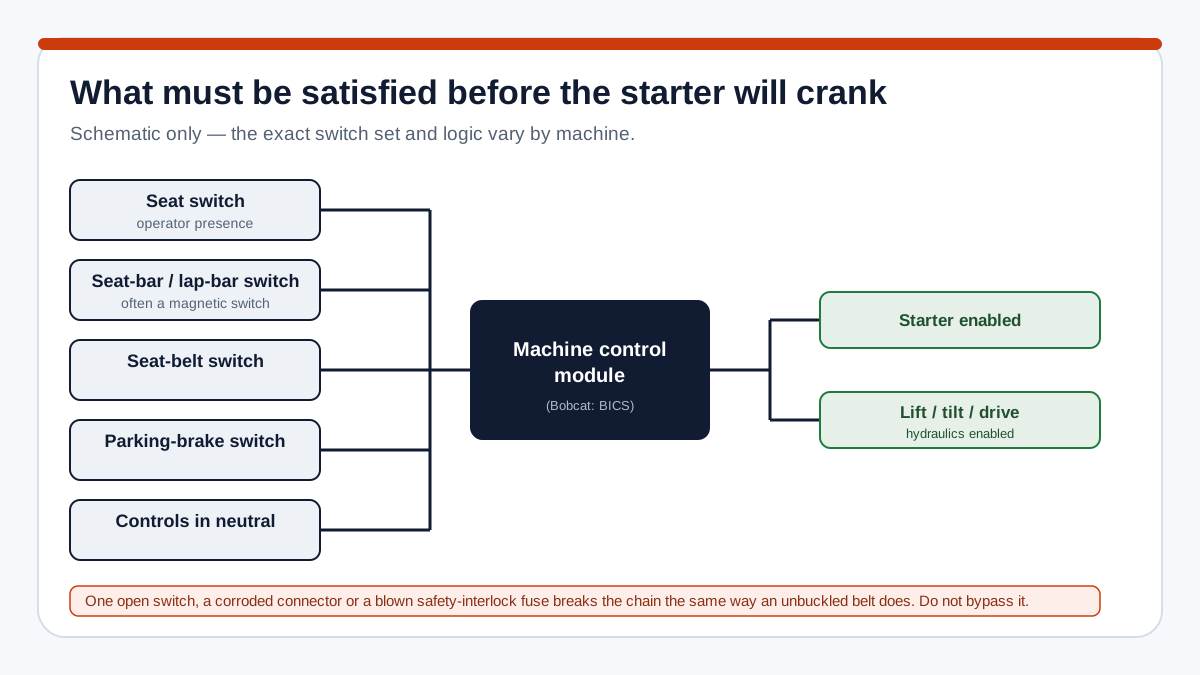
1. Understand what the seat and interlock switches actually protect
Skid steers and compact track loaders use an operator-presence (or operator-restraint) interlock system. Interlocked controls require the operator to be properly seated and restrained before the machine will start or before the lift and tilt hydraulics will work. Depending on the machine, that means some combination of a seat pressure or presence switch, a seat-bar or lap-bar switch, a seat-belt switch and the parking brake, and on newer machines a hydraulic lockout that must be in the locked position for the starter to engage. These inputs feed the machine control module. If the module does not see every required condition, it will not allow the starter to crank, and it deactivates or locks out the lift, tilt and drive functions.
This is a safety system, not a nuisance. NIOSH, in Preventing Injuries and Deaths from Skid-Steer Loaders (Publication 2011-128, which updates the 1998 Alert), describes an interlock device as an electrical or hydraulic lock tied to the operator restraint that prevents the engine from starting or the hydraulics from engaging - and mechanically locks the lift arms - when the restraint is not fastened or the operator is not properly positioned. NIOSH documents fatalities where a defeated interlock let the lift arms come down on a worker, and its guidance is unambiguous: never bypass interlocked controls, and never modify or bypass safety devices.
Penn State Extension puts it the same way: its skid-steer safety guidance states that an operator-restraint interlock system prevents the engine from being started or the hydraulic controls from being engaged if the restraint is not fastened or positioned correctly, and that owners should not disable this interlock. Together with the ROPS, the restraint and interlock form what the extension safety literature calls a zone of protection against being crushed in an overturn or pulled into a pinch point. A field diagnostic for Cat skid steers describes the practical circuit: the seat-belt switch, the seat-bar switch and the parking-brake switch feed into the machine control module, and the machine will not crank if any one of them fails.
So the goal here is not to get around the interlock. It is to find which part of it has failed and replace that part.
2. Rule out the simple causes before you condemn a switch
A large share of "won't start" calls are not a failed part at all. Before you order anything, work through the setup and power checks.
Seating and restraint position. The seat switch is a pressure or presence sensor. If you are perched on the edge of the seat, leaning out, or the seat cushion is worn and compressed, the switch may not register that anyone is aboard - plant yourself squarely in the seat. The seat also has to be able to travel down freely: Bobcat's Operation and Maintenance Manual calls for clearance under the seat and the seat spring so the sensor can move, and a no-start troubleshooting checklist makes the same point about a worn or edge-seated cushion. Debris, a toolbox or a wedged rag under the seat will hold it up. Then make sure the seat bar or lap bar is fully down, the parking brake is set, and the drive controls or joysticks are centred in neutral or their detent. On many machines the starter will not engage until the controls are home.
Power and fuses. A machine that has power to the lights and gauges but will not turn over is telling you the problem is in the start or safety circuit, not a dead battery. Check the fuses tied to the start and safety circuits against the fuse-panel legend. Many machines have a dedicated safety-interlock fuse - Bobcat technician references describe a low-amperage fuse - that feeds power to every interlock switch; if it is blown, none of the switches can signal the controller and the machine will not crank. While you are in there, look for corrosion, the white or green fuzz on battery posts and clamps, and clean it back to bright metal, because a poor connection can also collapse cranking voltage.
Read the panel. If the machine has interlock indicator lights - the BICS panel on a Bobcat sits at the right rear as you sit in the seat - note which one is not lit or is flashing. That is the circuit to look at first. The manual's troubleshooting chart maps each light state to the likely cause.
| What you observe | Most likely area | What to check next |
|---|---|---|
| Dash lights and gauges work, no crank, no click | Start / safety interlock circuit | Safety-interlock fuse, then each interlock switch and connector |
| Cranks only with the seat belt buckled or the bar held a certain way | A specific interlock switch or its adjustment | The seat-belt or seat-bar switch and its mounting, per the service manual |
| Starts fine, but lift/tilt or drive is dead or cuts out | Interlock satisfied for start but not for hydraulics | Seat switch and seat-bar switch under load; an indicator light that drops out |
| An interlock indicator light is out or flashing | The circuit that light represents | The manual's troubleshooting chart for that light |
| Intermittent - quits over bumps, restarts when you wiggle the seat | Connector or harness, not the switch body | Visual inspection of connectors and harness routing |
3. Isolate the failed part - machine off, from a safe position
Do this with the engine shut down, the key out, the parking brake set and the lift arms down. You are looking, not probing. The field-service consensus and the manufacturers agree on the sequence: inspect the switches and the visible connectors first, then use the manufacturer's diagnostic procedure to test the circuit.
Look at each switch and its wiring. The seat switch is usually under the seat or in the seat base: check that it is mounted, that the actuator or plunger is intact, and that the seat contacts it when you press down, and look for a cracked body or a disconnected lead. The seat-bar or lap-bar switch on many machines is a magnetic (reed or proximity) switch that reads a small magnet on the bar; contamination, a magnet that has shifted or fallen out, a bent bracket or a cracked switch can all stop it reading, and cleaning and realigning it is a documented check before replacement. The seat-belt switch is built into the buckle or the belt anchor: check that the latch clicks fully and that the lead is not pinched.
Connectors and harness are where intermittent faults live. Look for green or white corrosion in the pins, terminals that have backed out of the housing, a connector that is not fully latched, and harness that is chafed, melted near the engine, or chewed by rodents. Unplug, inspect, and reseat any connector that is clean; a connector that is corroded or damaged is itself the part to replace, and repair connectors and terminals are in the wiring and connectors category.
Then follow the service manual. The exact machine's service manual has the interlock diagnostic procedure - typically a sequence of continuity or voltage checks at defined points, in a defined order, with the machine in a defined state. Follow that. Do not guess at pin functions, do not back-probe a connector you cannot identify, and do not jump two terminals to "see if it starts." A wrong probe can damage the controller, and a jumper defeats the interlock. If you do not have the service manual or the right meter and training, this is the point to bring in a dealer or a qualified technician.
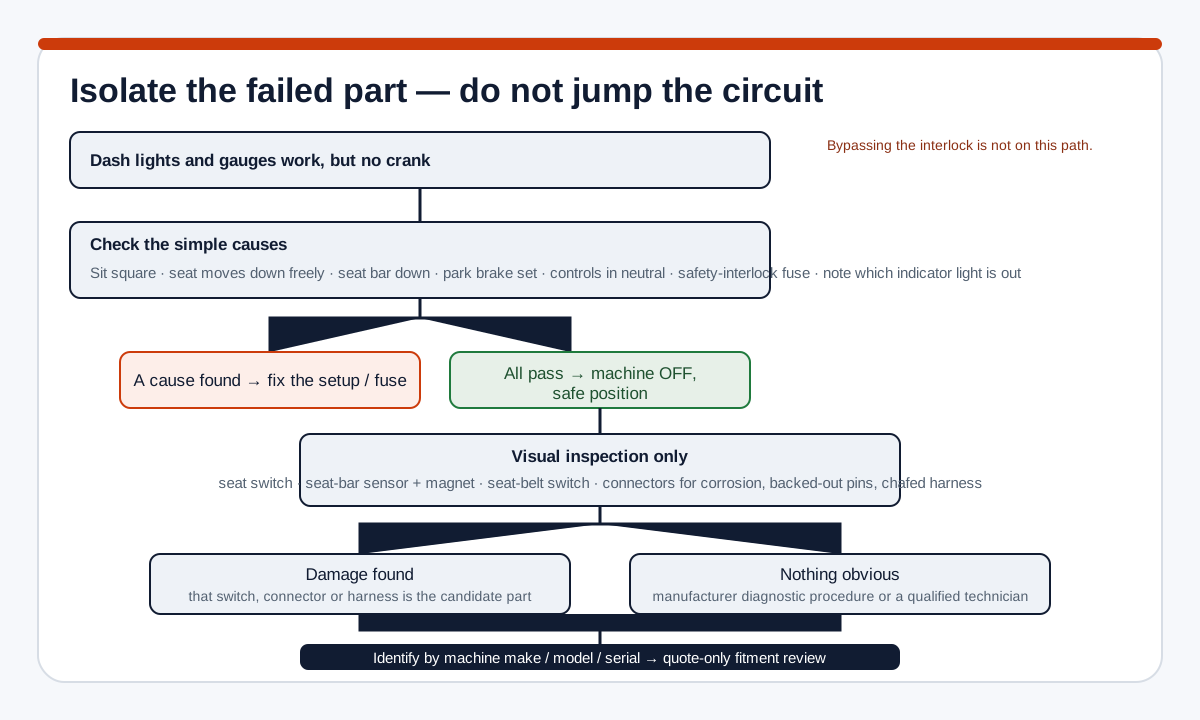
4. Order the right part - by machine identity, not by appearance
Once the inspection or the service-manual procedure points to a component, the candidates are a short list: the seat switch (seat pressure or presence switch), the seat-bar or lap-bar sensor, the seat-belt switch, the interlock wiring harness and repair connectors, and - only with reviewable evidence such as an OEM part number and revision - the machine control module or controller. A controller is rarely the first failure. The switches sit under electrical switches ("Operator, safety, ignition, and position switches"), the harness parts under wiring and connectors, and the seat itself under cab seats and restraints.
Identify the part the same way you would identify any skid steer part: by the machine manufacturer, the exact model and the serial or PIN range, because the switch, connector and controller can change within a model line. Keep discovery evidence separate from confirmed fitment - a photo of the old switch, or a part number stamped on it, narrows the candidates but does not by itself confirm that a given part fits your machine. The general method is in how to find the right skid steer part. Skid Steer Zone is a quote-only catalog: a match is reviewed before a quote, and nothing here is stock, price, a wiring diagram or an approval to operate.
5. Why not just bypass the seat switch?
It is the most-searched shortcut, and it is the wrong move for three reasons.
It defeats a protective system. The interlock keeps the machine from moving or the arms from dropping when you are not in the seat and restrained. NIOSH ties defeated interlocks directly to fatalities, including a case where a glove jammed into the seat-belt linkage held the interlock closed and let the lift arms rise. Penn State Extension and the Cooperative Extension ag-safety guidance both say plainly: do not disable the interlock, and never bypass or modify a safety device.
It does not fix anything. A jumper hides a corroded connector, a chafed harness or a failing switch that will keep causing problems, often intermittently, which is worse. And it creates liability and resale problems: a machine with a defeated safety system is a documented hazard for anyone who operates it after you. The safe path is the one above: isolate the failed switch, sensor or harness section and replace it.
Send an interlock evidence record for a quote
A complete request lets a parts reviewer connect the symptom to the right component and reduces wrong-part risk.
- Machine manufacturer, exact model and full serial or PIN range.
- The symptom precisely: no crank with live dash lights, no crank at all, starts but hydraulics dead, or intermittent - and which interlock indicator light is out or flashing.
- Which simple causes you have already checked: seating position, seat clearance, seat bar, park brake, controls in neutral, safety-interlock fuse.
- Photos of the seat underside and mount, the seat-bar switch and its magnet, the seat-belt buckle switch, and each interlock connector - taken before cleaning, so corrosion and damage are visible.
- Any OEM part number or marking found on the old switch, connector or harness tag.
- The result of the service-manual diagnostic procedure, if you or a technician ran it.
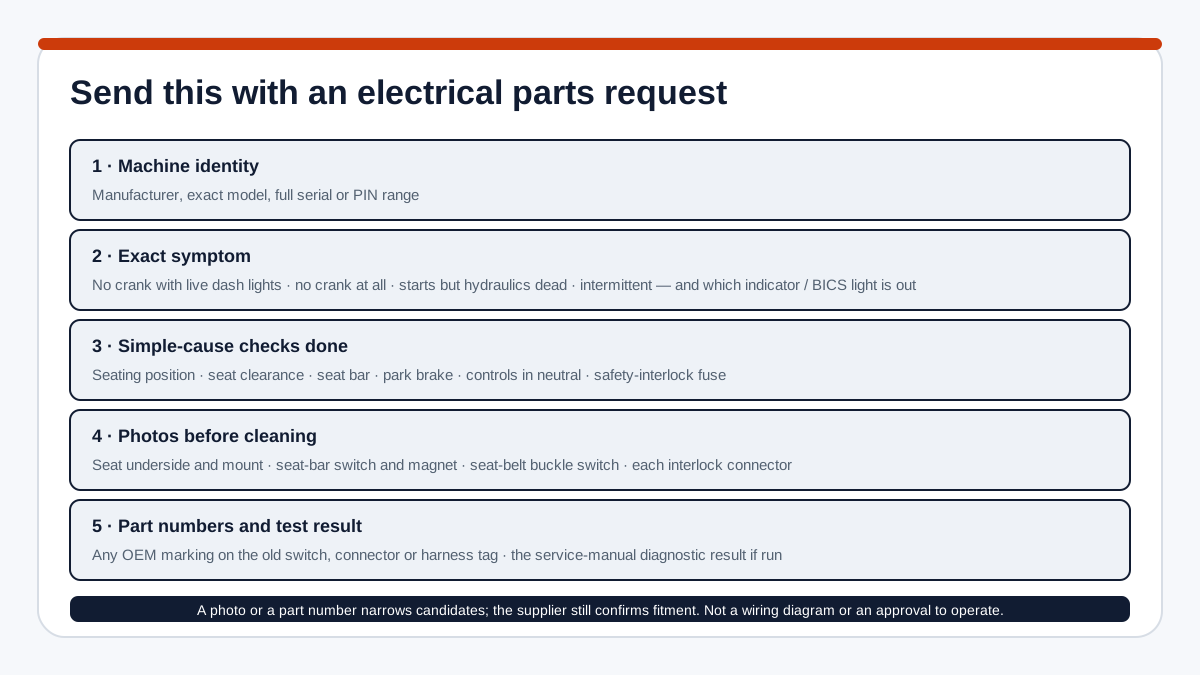
Move from diagnosis to a fitment-reviewed quote
Once the failed component is identified, use the electrical and sensors parts section for switches, sensors, wiring and connectors, and the cab seats and restraints section if the seat or its mount is involved. Then send the evidence record through the quote path. Skid Steer Zone is quote-only: photos and part numbers narrow candidates but do not independently confirm fitment, and nothing here is stock, price, a wiring diagram or an operating approval.
FAQs
- My skid steer won't crank but the dash lights and gauges work - what does that mean?
- It points to the start or safety interlock circuit rather than a dead battery. Power is reaching the machine, but the control module is not seeing every condition it needs to allow the starter to engage. Check the safety-interlock fuse, sit squarely in the seat, lower the seat bar, set the parking brake and centre the controls; if it still will not crank, isolate the failed interlock switch, sensor or connector from a safe position with the machine off.
- Can I bypass the seat switch to get my skid steer started?
- No. The seat, seat-bar and parking-brake interlocks stop the machine from moving or the lift arms from dropping when you are not seated and restrained, and NIOSH links defeated interlocks directly to fatalities. A bypass also hides the real fault, which is usually a corroded connector, a chafed harness or a failing switch. Isolate and replace the failed part instead.
- How do I tell whether it's the seat switch or the seat-bar sensor?
- Start with the interlock indicator lights if the machine has them - the one that is out or flashing points to that circuit. Then, machine off and from a safe position, check each switch: the seat switch should be contacted when the seat presses down and the seat must move freely; the seat-bar sensor is often a magnetic switch that needs its magnet aligned and the switch clean. Confirm with the machine's service-manual diagnostic procedure rather than guessing.
- A BICS light (or seat sensor light) stays on or won't come on - what do I check?
- The panel light that is not behaving identifies the unsatisfied circuit. Check that circuit's switch and wiring: seat clearance and the seat switch, the seat-bar switch and its magnet, or the seat-belt switch, plus the connectors. The Bobcat manual's troubleshooting chart maps each light state to a likely cause; other brands have an equivalent chart in the service manual.
- Do I need a new seat switch, or is it just the wiring?
- Often it is the wiring. Intermittent faults - the machine quits over bumps, or restarts when you move the seat - usually come from a corroded or unlatched connector, a backed-out terminal or a chafed harness, not the switch body. Inspect the connectors and harness first; if they are clean and the switch still fails the service-manual test, replace the switch.
- What part do I order for a skid steer seat safety switch?
- The candidates are the seat pressure or presence switch, the seat-bar sensor, the seat-belt switch, and interlock wiring or repair connectors; a controller only with reviewable evidence such as an OEM part number. Identify it by the machine manufacturer, exact model and serial or PIN range, and send that with photos and any markings for a quote-only fitment review.
Sources and limitations
The sources describe the purpose of skid steer operator-presence interlocks and the rule against bypassing them (government and university-extension safety guidance), the interlock circuit and the conditions the machine control module must see before the starter will engage (a manufacturer operation manual and field-service references), the simple setup and fuse causes of a no-crank, and the safe isolation sequence (visual inspection, then the manufacturer diagnostic procedure). No model-specific interlock wiring diagram, connector pinout, wire colour, continuity value or bypass procedure is provided or implied. The exact machine's service manual and a qualified technician control the circuit test, wire identification and any adjustment, and the parts decision remains quote-only.
- NIOSH - Preventing Injuries and Deaths from Skid-Steer Loaders (DHHS (NIOSH) Publication No. 2011-128, December 2010; updates the 1998 NIOSH Alert): an interlock device is an electrical or hydraulic lock tied to the operator restraint that prevents the engine from starting or the hydraulics from engaging and mechanically locks the lift arms; never bypass interlocked controls; never modify or bypass safety devices; defeated interlocks have contributed to fatalities. The publication PDF is image-based; these statements were captured from search-result excerpts quoting it and cross-checked against the two university-extension sources.
- Penn State Extension - Skid-Steer Safety for Farm and Landscape (Dennis J. Murphy, Ph.D. and William Harshman, published 10 March 2026): an operator-restraint interlock system prevents the engine from being started or the hydraulic controls from being engaged if the restraint is not fastened or positioned correctly; "do not disable this interlock"; the ROPS protects against being crushed in an overturn; the components form a zone of protection.
- Cooperative Extension, Ag Safety and Health Community of Practice - Skid Steer Safety (updated 14 May 2025): "never bypass or modify safety devices"; the interlock is an electrical or hydraulic lock tied to the operator restraint that prevents engine start or hydraulic engagement and locks the lift arms; use the lift-arm lockout device for maintenance; the ROPS protects the operator in an overturn.
- Iron Horse Field Service - CAT Skid Steer Won't Start: Field Diagnostic (published 5 July 2026): the seat-belt switch, the seat-bar switch and the parking-brake switch feed into the machine control module and the machine will not crank if any one of them fails; newer machines add a hydraulic lockout switch; inspect the switches and visible connectors from a safe position, then use the manufacturer diagnostic procedure to test the circuit; do not bypass seat, seat-bar, parking-brake or other safety interlocks. Field-service reference, Cat-specific; cross-checked against the manufacturer manual and extension sources.
- Equipment Solutions Outdoors - Skid Steer Won't Start or Move? A Troubleshooting Checklist (published 6 July 2026): the seat pressure switch may not register if you sit on the edge or the cushion is worn - sit square; a blown fuse or failed relay in the start circuit leaves power to the lights and gauges but no crank; check the fuses tied to the start and safety circuits against the legend; corrosion on battery posts and clamps chokes the current the starter needs. Field-service reference.
- Bobcat Company - Loader Operation & Maintenance Manual, "Bobcat Interlock Control System (BICS)" section (Bobcat 453 / 553 loader manuals), plus Bobcat dealer and technician BICS references: BICS deactivates the lift, tilt and traction drive functions unless the required conditions are met; the seat sensor (three-wire) detects operator presence and needs clearance under the seat and the seat spring to move freely; the seat bar must be lowered; the BICS panel indicator lights show which condition is unsatisfied. Manufacturer manual content captured from published excerpts; the magnetic-seat-bar-switch and low-amperage safety-interlock-fuse details come from Bobcat dealer and technician references and are flagged as such. No model-specific pinout, wire colour or bypass step is read or repeated.
This guide combines published government, university-extension, manufacturer-manual and field-service references with an editorial method for reading a no-crank symptom and isolating an interlock part safely. No machine was inspected for it. Use the exact machine documentation and a qualified service professional for circuit testing, wire identification, adjustment and operating acceptance.