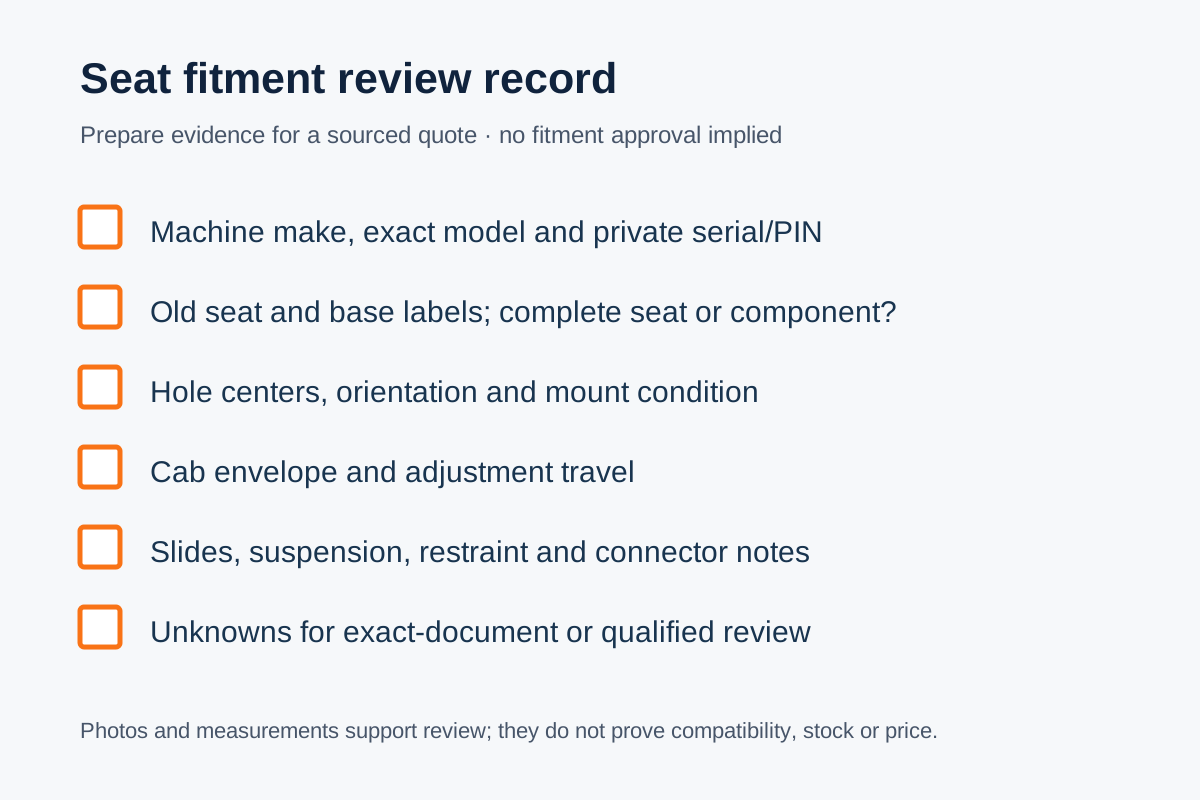
Before ordering a skid steer replacement seat, identify the exact machine and old seat assembly, then record the mounting-hole centers, available space through adjustment, and the suspension, slide, restraint and attached electrical parts. Those observations make a candidate worth reviewing; they do not establish that it fits. Compare them with documentation for the exact machine and proposed part before committing to a replacement.
Seat fitment record
- Identify
- Record machine make, exact model and serial or PIN range, plus the old seat or base label if readable.
- Measure
- Record hole centers in both directions, mounting orientation and the space occupied through adjustment travel.
- Boundary
- Document suspension, slides, restraints and any attached switch or connector; do not assume they can be transferred or bypassed.
Measure the mount from the old assembly
First distinguish the piece being replaced. A cushion, seat upper, sliding base and complete suspension-seat assembly are different quote requests. Photograph the old assembly and any readable part label before separating components. Include machine identity in the private inquiry; avoid putting a serial number in a public URL.
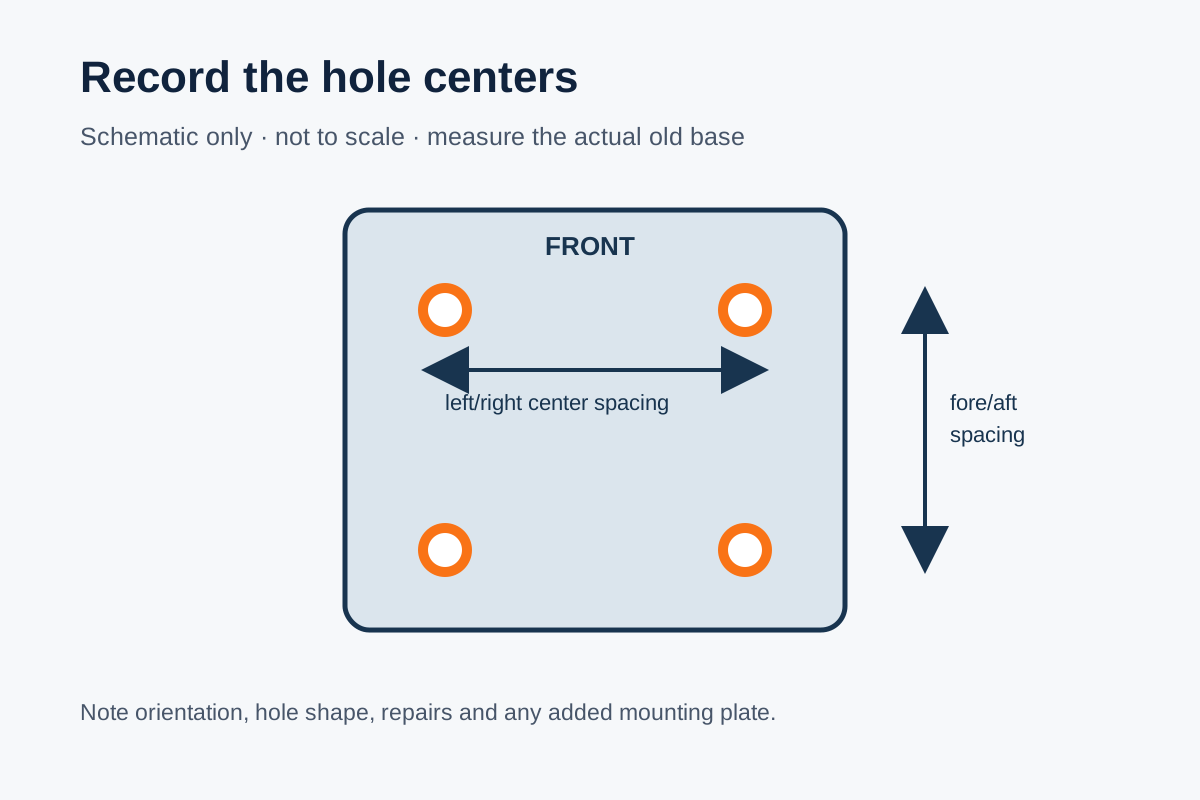
Record the mounting-hole centers left to right and front to back on the existing base, plus which edge faces forward. Measure from the center of one hole to the center of the corresponding hole, not from the outside edges of the base. Note the number and shape of holes and whether the mounting surface has repairs or added plates. A nominal seat width or product photograph cannot replace this record. If the old base is damaged or modified, flag the measurement as uncertain rather than an original factory pattern.
Check the seat envelope and adjustment
The mounting pattern is only one interface. Record the old assembly's width and height where they matter in the cab, then note how much room it occupies when slid and adjusted through the positions the operator uses. Photograph nearby controls, the restraint bar and door clearance from useful angles. If the old assembly has suspension travel or a sliding base, identify that configuration separately from the cushion or seat upper.
These are screening inputs, not a universal clearance rule. The proposed replacement may have a different profile, travel or base height. Leave the candidate marked review required until its documented dimensions and the exact machine arrangement can be compared.
Record suspension, restraints and attached parts
Document where the belt and buckle mount, whether those points are on the seat or machine, and which brackets or hardware belong to the old assembly. Record any switch, harness or connector attached to the seat, including legible labels and clear photographs. Do not assume the old restraint or electrical parts can be moved onto a new seat. The exact machine parts and service documentation, and a qualified technician for consequential work, control that decision. For the safety boundary against bypassing operator-restraint interlocks, see NIOSH's skid-steer loader safety alert; it does not establish compatibility for a replacement seat.
This guide identifies an assembly before ordering; it does not test an interlock or diagnose a machine that will not crank. For a no-start symptom, use the separate seat-switch and no-start diagnostic guide. It does not turn an unknown seat into a confirmed replacement.
Send a seat fitment record for review
Put the evidence in one request: machine make, exact model and serial/PIN range; old seat and base labels; center-to-center mounting measurements and orientation; envelope and adjustment notes; photos of the mount, suspension/slide, restraint points and attached connectors; and a short list of what is still unknown. Keep the serial/PIN in the private request form rather than an email subject or public link.
The seat parts and fitment-review category is the commercial starting point. Its source-photo records describe part families, not a verified seat SKU or compatibility for your machine. An evidence packet helps review a candidate; a photograph, search listing or quote request alone does not confirm fitment, stock or price.