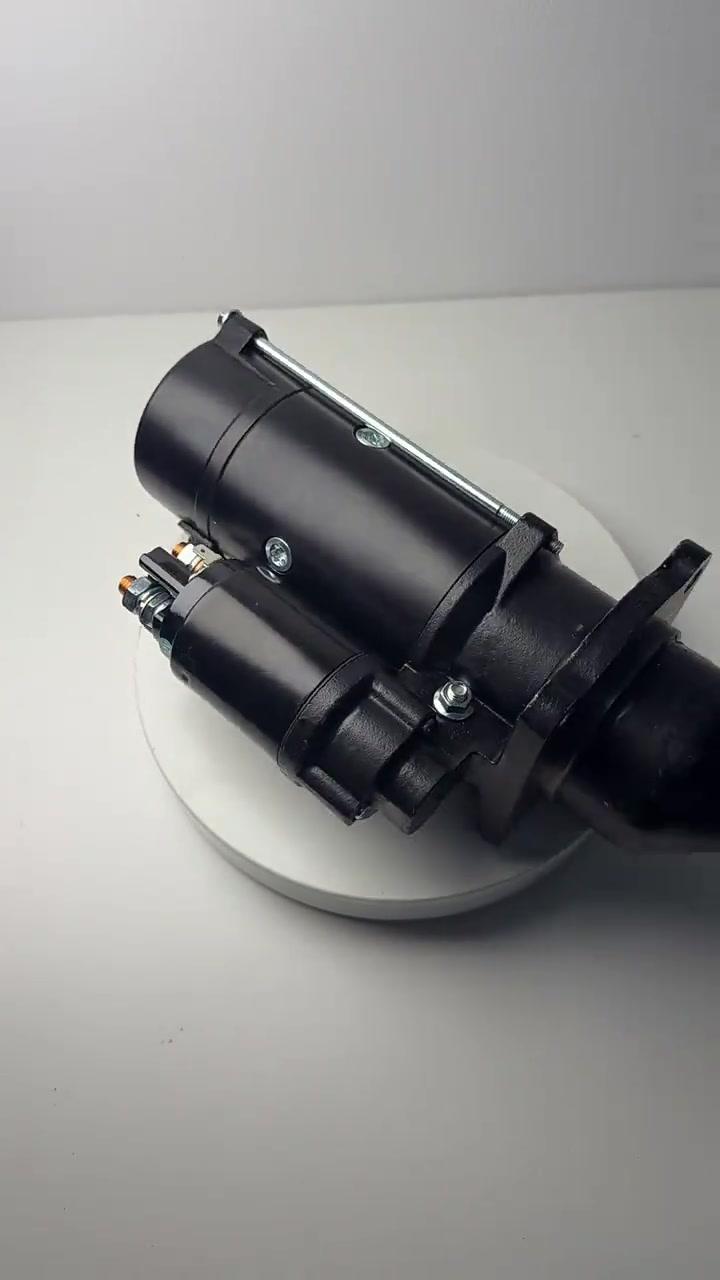
Starter Motors
Starter motors for engine cranking. Match voltage, tooth count, nose housing, mounting pattern, terminals, and rotation.
View product pageEngine & Cooling
Product pages
Starters & Alternators guide
Starting and charging components identified by exact application.
Determine whether the problem concerns cranking or charging, then record the engine and electrical system. For a starter, compare nose, pinion, rotation, solenoid position, terminals, and bolt pattern; for an alternator, compare mounting ears, pulley, connector, output markings, adjustment arrangement, and belt alignment.
Use the machine identity, installed function, measurable interfaces, readable markings, and source photos together. A matching shape, connector, or single dimension is not proof of fitment.
Identification starting points
Record the complete machine identity, installed system, exact position, and job performed by the component.
Measure the physical features that connect, mount, seal, rotate, guide, or retain this engine and cooling-part.
Capture labels, part and casting numbers, revisions, full views, close-ups, and the surrounding assembly.
Selection checklist
Frequently asked questions
No. Similar-looking candidates can differ in dimensions, interfaces, internal configuration, material, or application. Use appearance only as a starting clue and compare machine and engine, function and position, connections, mounting geometry together with readable identifiers.
Provide the machine brand, full model, serial or PIN, exact installed position, overall photos, close-ups of every marking, and the measurable engine and cooling-part interfaces. Missing identification data should remain unverified rather than being guessed.
Starters & Alternators can change by machine side, function, parent assembly, serial range, or option package. The installed location helps distinguish candidates that otherwise share a similar shape or connector.
No. A result only places the item within the Starters & Alternators review path. Fitment remains unverified until the machine record, identifiers, dimensions, interfaces, and installed configuration have been reviewed together.
Include the installed context, a full view of the component, every side and mating interface, readable labels or castings, and close-ups of critical measurements. Keep the parent assembly or mating component visible where practical.
Still not sure which part you have?
Include the installed position, readable identifiers, interfaces, dimensions, source photos, and full machine identity.
Fitment-first search