Augers
Auger Bit
Replaceable auger bits documented from 6 to 30 inches. Drive-head coupling, flighting, tooth style, ground conditions, and required depth must be confirmed.
View productAugers
| Specification | 3,500 N·m | 7,000 N·m | 10,000 N·m |
|---|---|---|---|
| Maximum torqueN·m | 3500 | 7000 | 10000 |
| Maximum hole diametermm | 500 | 700 | 900 |
| Hydraulic flowL/mm | 50–75 | 55–115 | 70–150 |
| Working pressureMPa | 16 | 16 | 16 |
| Weightkg | 240 | 260 | 320 |
| Lengthmm | 1160 | 1160 | 1160 |
| Widthmm | 1050 | 1050 | 1050 |
| Heightmm | 490 | 490 | 490 |
Product information
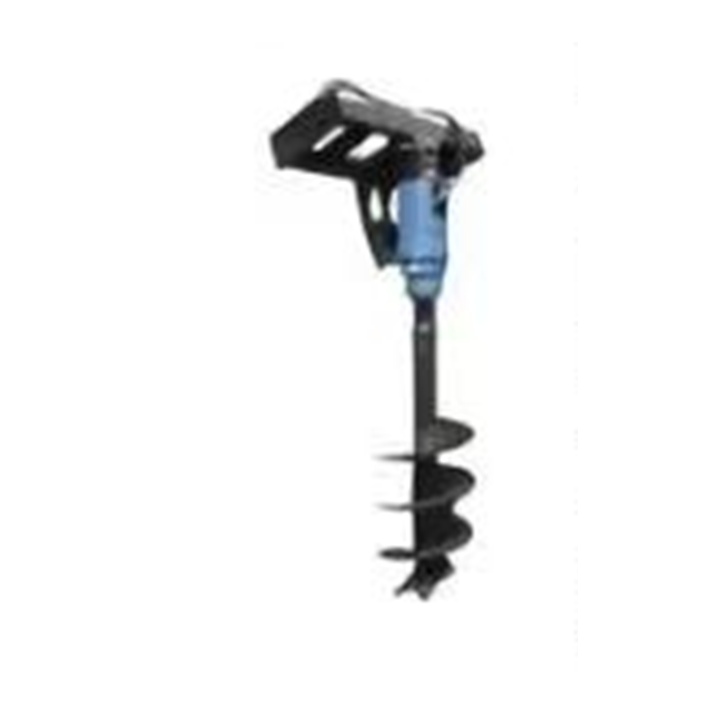
Drill holes with three documented drive-torque configurations. Bit diameter, soil conditions, auxiliary flow, pressure, and loader stability require review.
Tools for drilling, trenching, breaking, excavating, and working compacted ground.
Fitment-first search
Product questions
A skid steer auger drills vertical holes for fence posts, footings, signs, planting, and similar ground work. The right drive head and bit depend on the required hole diameter and depth, the ground conditions, and the number of holes to be drilled.
No. The mounting plate, auxiliary hydraulic flow and pressure, hose couplers, and carrier capacity must all match the machine. Larger bits and difficult ground can place greater torque and load demands on both the auger and the skid steer, so the machine model and serial number should be reviewed before selection.
Provide the skid steer's auxiliary hydraulic flow and pressure, plus clear photos or specifications for the pressure and return couplers. Also identify any required case-drain line, flow-reversal function, electrical connector, or in-cab control used by the proposed drive head.
Specify the required hole diameter, depth, and quantity, along with the soil type, moisture, rocks, roots, slope, and available working space. These details help narrow the drive torque and speed, bit style, tooth configuration, extension length, and suitable carrier size.
Send the skid steer make, model, serial number, and rated operating capacity; auxiliary flow and pressure; mounting-plate and coupler photos; required hole diameter and depth; and a description of the ground conditions. Include any readable labels, drive-head dimensions, or existing bit measurements when available.